
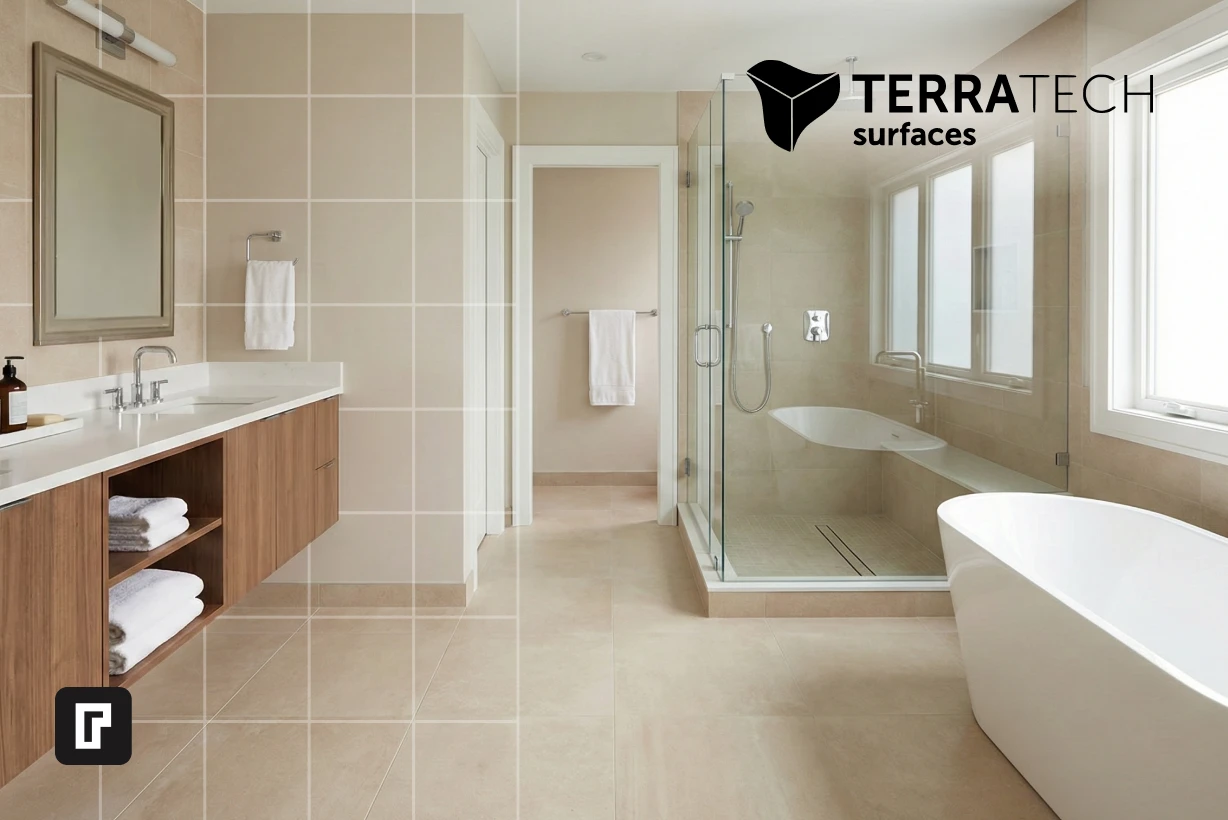

TerraTech delivers premium surface solutions crafted to elevate every space - indoors or out. Powered by Venux, collections are rooted in natural beauty and engineered for lasting performance.
Remodeling - Bathrooms
11-50
Job win rate doubled, estimating time reduced by 90%

When Eric Maki started Terra Tech Surfaces, he wasn’t trying to build a massive operation overnight. He was focused on quality, precision, and control—doing the kind of home remodeling work that speaks for itself when a homeowner walks into the bathroom and immediately feels the difference of their dream bathroom brought to life. Early on, that approach worked well. His crew stayed busy, the work was strong, and the company’s reputation grew.
As leads increased, though, Eric ran into a problem that wasn’t about skill or craftsmanship. It was about speed and consistency in the quoting process. He could deliver a professional install, but getting the quote out fast enough to win the job became harder as the schedule filled up. Over time, it became clear that quoting wasn’t just an admin task. It was the front door to every remodeling project—and if that door stayed closed too long, the opportunity disappeared.
Terra Tech specializes in bathroom remodeling built around premium sintered stone shower systems and solid surface pans. Many of their bathroom remodeling jobs include upgrading a shower, replacing a tub, or installing a bathtub-and-shower combination, because those are the core features that define how a bathroom functions. The bathroom is also one of the most decision-heavy rooms in the house, which means even “standard” work can quickly become complex once homeowners start weighing design choices.
A typical bathroom renovation might include a new tub, updated fixtures, tile on walls, a new sink, and changes to doors—sometimes interior doors, sometimes cabinet doors, sometimes both. In some projects, bathroom cabinets become a major focus, especially when homeowners want better storage, improved functionality, or a cleaner modern style. In others, the layout is the constraint and the goal becomes to maximize space while still delivering durability and visual interest.
As Terra Tech’s demand grew, the range of jobs widened. One week might include a guest bathroom refresh. Another might include primary bathrooms inside primary suites, where the expectations are higher and the scope can expand quickly. That variability is normal in home renovation, but it creates pressure when the estimating process is slow.
As the schedule filled up, estimating started competing with production. When the crew was busy installing, quoting got pushed back. A bathroom remodel that should have been priced quickly might sit for days, especially if the homeowner requested changes or wanted multiple options. Eric noticed that by the time some quotes went out, the urgency was gone. The homeowner’s excitement faded, or another contractor already had a price on the table.
Bathroom remodeling is often sold on trust. Homeowners are deciding who will be in their house, who will touch their walls and floor, and who will manage the cost and disruption of a major remodel. If the quoting process feels slow, disorganized, or uncertain, homeowners interpret that as risk—even if the contractor is highly skilled.
Eric’s estimating lived inside a separate takeoff tool, and each bathroom quote felt like a custom job that had to be rebuilt every time. If a homeowner wanted a different tile, a different tub, or updated cabinet doors, he had to revise the estimate manually and resend it. Replacing a sink or swapping fixtures required more recalculations. Even simple changes triggered a chain reaction: labor time, materials, margins, and price adjustments.
This made the process expensive in terms of time. A standard bathroom remodeling quote could take one to two hours. That might not sound huge until you multiply it across a busy month of leads, callbacks, follow-ups, and install work. The more jobs Terra Tech installed, the less time there was to quote, and the fewer jobs they won next month. The pattern was cyclical, and it was costing Eric money.
In home remodeling, speed communicates professionalism. When a contractor responds quickly with a clear proposal, homeowners feel reassured. They feel like the project is manageable. They feel like the contractor has tools, systems, and experience. When the contractor is slow, homeowners don’t just wait—they continue shopping.
Speed also protects momentum. A bathroom renovation conversation often starts with fresh ideas: new tub, upgraded shower, updated lighting, maybe bathroom cabinets or custom cabinetry, maybe improved storage. If the quote arrives late, those ideas turn into doubts, and homeowners start questioning cost, budget, and whether they should spend the money now or later.
Eric saw it happening repeatedly. A couple days go by. Another day goes by. The homeowner stops replying. Or they reply and say they already hired someone else. Terra Tech wasn’t losing because of workmanship or price. They were losing because the quoting process couldn’t keep up with demand.
In remodeling, being first matters. The first contractor to deliver a professional estimate often frames the homeowner’s expectations about cost and scope. If Eric wasn’t first, he was often forced into a reactive position. Even if his approach was better, the homeowner had already anchored to another number, another scope, and another timeline.
Bathroom remodeling feels custom, but much of it is repeatable. The shower and tub work follows patterns. Fixtures repeat. Tile and walls repeat. Floors repeat. Even doors and cabinet doors follow predictable pricing structures once you build them into a system. But without that system, each bathroom remodel becomes a one-off puzzle.
This is where budgeting gets messy. Homeowners ask for options. They ask for a new tub instead of the current tub. They ask about light fixtures and lighting upgrades. They ask about different tile. They ask about cabinets. They ask about cabinet hardware. They ask about painting. They ask about related rooms, like the laundry room, because once you start renovating one space, it often triggers ideas for another.
In that environment, the contractor ends up adding buffer to protect the budget and the business. That can create friction in the sales process, because homeowners want a clear price, not a vague range. And the more manual the estimate, the harder it is to keep cost, money, and scope aligned.
Every revision felt like rebuilding the job. If the homeowner wanted a different shower finish, a different panel option, or a different tub selection, Eric had to redo the estimate and resend it. If they wanted different cabinet doors or upgraded custom cabinetry, more changes. If they wanted an accessibility upgrade—grab bars, improved access, or adjustments for limited mobility—more changes again.
Nothing was reusable, and that’s the part that made growth painful. The work was solid. The business was busy. But the quoting system forced Terra Tech to rebuild from scratch repeatedly, even for remodeling projects that were fundamentally similar.
Slow estimating costs opportunities. It also costs energy. It turns promising leads into stress, because every unanswered request sits in the back of your mind. It also changes how a contractor behaves: instead of sending quotes quickly, you procrastinate because you know the process will take a chunk of time you don’t have.
That’s why improving quoting can save time and money. It’s not only about cost in the estimate; it’s about the business cost of lost jobs. For Terra Tech, the difference between quoting in 15 minutes versus quoting in 1–2 hours wasn’t just convenience. It was the difference between keeping up with demand and constantly falling behind.
Eric’s skill wasn’t the issue. The installs were professional. The products were premium. The craftsmanship had staying power—timeless craftsmanship, not a cheap remodel that looks good for six months and then breaks down.
But the front-end experience wasn’t matching the quality of the back-end work. Homeowners were judging Terra Tech before they ever got to see the install. They were judging based on responsiveness. And that was fixable.
Eric recognized a clear pattern: when Terra Tech was busiest installing, quoting suffered. When quoting suffered, the next wave of work shrank. It wasn’t sustainable to keep relying on manual processes and hope it would magically improve.
He needed a system that could handle the reality of home remodeling—variable scope, evolving ideas, and homeowners who want to see options fast.
Bathrooms follow patterns. A shower is a shower, even if finishes change. A tub install follows a sequence, even if you’re replacing an old tub with a new tub. Fixtures may vary, but the logic repeats. Walls and floor work repeats. Doors repeat. Cabinet doors repeat. Cabinets repeat. Once you standardize, you can reuse.
The key is turning repeatable work into repeatable pricing, so you aren’t building every remodeling project from scratch.
Eric didn’t want more software that made him do more work. He wanted tools that made him faster and more consistent. He wanted a quoting system that could support his business model, not fight it.
That search led him to Bolster, because it wasn’t built around one-off takeoffs. It was built around assemblies and structured estimating—exactly what repeatable bathroom remodeling needs.
Bolster offered a clear path: build assemblies for the core system, then build selectors so homeowners could explore options without forcing Eric to re-quote every time.
It wasn’t about automating craftsmanship. It was about reducing repetitive admin work so the business could scale without chaos.
Eric started with the “knowns”—the products, labor steps, and pricing structures he already trusted. That mattered, because contractors don’t adopt tools when they feel like the tool is guessing. They adopt tools when the tool respects reality.
He worked with the team to create a pricing structure that matched how Terra Tech actually does the work. That created confidence and made it easier to commit to the process.
Sintered stone panels became assemblies. Solid surface pans became assemblies. The shower system was no longer a custom spreadsheet line-by-line rebuild—it was a repeatable block that could be applied to new projects.
Each assembly embedded labor, materials, and install logic. That reduced uncertainty and made the estimate more consistent job to job.
Once assemblies existed, pricing became easier to defend. It became easier to explain. It became easier to trust internally, which meant Eric could move faster when quoting.
It also made it easier to maintain margins, because the cost inputs weren’t constantly being reinvented. For home remodeling businesses, that consistency matters because it protects profitability as volume increases.
Homeowners always ask for add-ons. “Can you paint?” “Can you update the lighting?” “Can you swap the tub?” “Can you add cabinets?” “Can you change the doors?” “What about the laundry room next?”
Auto-cost helped Terra Tech handle those unknowns. Instead of guessing, Eric could price the request confidently and keep the project moving. That bridged gaps that no contractor can memorize perfectly.
This changed the sales dynamic. Eric could say “yes” more often, without fear that he was underpricing. That increased scope opportunities and made it easier to upsell responsibly.
When a homeowner sees a contractor confidently price a bathroom renovation and explain it clearly, trust increases. The proposal feels professional. The process feels organized. And the homeowner becomes more comfortable spending money.
Over time, Terra Tech built a library of reusable options for bathroom remodeling. That library included the core shower assemblies, tub options, fixtures, tile approaches, cabinets, and doors. It included common upgrades, too—like bathtubs, lighting, and specific fixtures that homeowners frequently request.
Instead of treating each job as a fresh estimate, Eric could start from a proven template and adjust details like dimensions, room layout, and selected finishes.
Selectors took the library to the next level. Instead of sending revised quotes every time someone wanted a different finish, Eric could let homeowners explore variations inside a single proposal.
That matters because homeowners don’t decide everything at once. They explore ideas. They compare. They ask for alternatives. Selectors allow that process without forcing repeated admin work.
With selectors, homeowners could choose between finishes, compare shower options, and see how choices affected cost. Cabinet doors could be upgraded. Cabinet hardware could be changed. Light fixtures and lighting upgrades could be explored.
This was especially helpful in primary bathrooms and primary suites, where homeowners often want layered options. It also helped in a guest bathroom, where homeowners may want a simpler approach but still want to see clean, modern choices.
Selectors also improved presentation. The quote wasn’t a dull spreadsheet export. It had visual interest. It felt modern. It felt like a system.
That matters because homeowners often judge professionalism by how clearly a contractor explains the project. A well-structured proposal signals competence.
Building selectors took effort initially. Eric had to think about how to organize options. He had to define combinations. He had to clarify what belongs in the base scope versus an upgrade.
But once he was comfortable, creating selectors became routine. That’s where the payoff began.
Once the library and selectors were in place, bathroom quotes dropped from one to two hours to around 15 minutes. That’s not a small improvement. It’s a fundamental shift in operations.
It meant Eric could quote more projects per week. It meant fewer delays. It meant fewer leads slipping away.
Instead of putting estimates off for days, Eric could quote after work and send a proposal that night. Homeowners would open it in the morning, while the project still felt fresh.
That speed created momentum. It also created access—homeowners got what they needed to make a decision.
In remodeling, being first with a clear and professional quote often wins. It anchors expectations. It builds confidence. It shows the contractor is organized.
Eric started winning more because he was no longer the contractor who “gets back to you in a few days.” He was the contractor who moved fast and looked professional.
Within about four months, Eric estimated that Terra Tech’s win rate doubled. That’s the kind of result contractors chase for years, and it didn’t require more staff or reduced prices.
It came from improving responsiveness and reducing friction in quoting.
Faster quoting meant more quotes sent. More quotes meant more wins. It also meant better-qualified homeowners, because the process helped filter serious buyers from tire-kickers.
Homeowners who engaged with the proposal, explored options, and made selections were signaling seriousness. That helped Terra Tech focus attention on the right leads.
Once the system worked for bathrooms, Eric could confidently quote additional work. Kitchens became realistic. Laundry room work became part of the conversation. Additional rooms in the house followed naturally.
Some homeowners also brought up landscaping as part of a broader home renovation vision, because once you’re renovating, it’s common to start planning improvements across the property.
Bathrooms were the entry point, but the system supported broader home remodeling. Closets, cabinets, bedroom updates, and other interior work became easier to scope and price.
That expansion wasn’t random. It was powered by structured estimating, reusable assemblies, and tools that reduced the pain of quoting.
Primary suites often include layered scope: primary bathrooms, closets, and sometimes a connected bedroom. That complexity used to slow down pricing, because it meant more decisions and more uncertainty.
With assemblies and selectors, Eric could price primary suites more confidently and present choices without turning the quote into a time sink.
Many homeowners also care about safety and long-term usability. Grab bars, improved access, and upgrades for limited mobility are common requests, especially in primary bathrooms or first floor remodels.
Because the system could handle add-ons cleanly, those needs could be included without derailing the estimate.
Functionality mattered as much as style. Storage, layout, and day-to-day usability are what make a bathroom feel good over years, not just weeks.
That’s why cabinets, doors, and the placement of fixtures matter. It’s also why lighting and light fixtures matter—because poor lighting makes even premium finishes feel cheap.
In smaller rooms, especially guest bathroom layouts or first floor bathrooms, the goal is often to maximize space while keeping the remodel clean and durable.
A system of assemblies makes those projects easier to plan because core pieces can be adjusted without reinventing the entire scope.
When the proposal is clear, budget conversations become more grounded. Homeowners can see where the cost comes from. They can see the difference between base scope and upgrades.
They can also make decisions about what to spend money on now versus later, without feeling forced.
For some homeowners, financing options are part of the decision. When those conversations happen early, the project moves faster and feels less stressful.
A clear scope paired with financing options can keep a remodeling project from stalling.
Instead of chasing every idea, homeowners can prioritize. They can focus on upgrades that matter to them: a new tub, better fixtures, higher-quality tile, or improved cabinets.
This helps them spend with purpose and avoid regret.
A thoughtful bathroom renovation can improve resale value, but homeowners need confidence in the scope and price to feel good about the investment.
When the plan is clear, resale value becomes easier to understand. The homeowner can see why the remodel matters and what they’re getting for the money.
Terra Tech could present modern design choices, natural stone upgrades, and timeless craftsmanship without making the proposal feel chaotic.
The quote reflected a structured process, and that structure made the style feel intentional.
Bathroom cabinets, custom cabinetry, and furniture choices often shape how the room feels day-to-day. Cabinet doors matter. Hardware matters. Cabinet hardware matters.
So do storage decisions, closet connections, and the small details that make a remodel feel finished instead of patched together.
Walls, floors, tile, and fixtures are where many remodeling projects get messy if the scope is unclear.
With a system, those pieces can be organized, priced, and presented cleanly, which reduces misunderstandings later.
Lighting and light fixtures are not “extras” in bathroom remodeling. They change the mood, improve functionality, and affect how materials look.
Fixtures also matter because they’re touched every day. They’re functional, and they signal quality.
Clear quotes reduce change orders because the homeowner understands what’s included. They understand what they’re choosing. They understand the scope.
Renovating becomes smoother when expectations are set correctly at the start.
Selectors reduce the need for repeated revisions. Homeowners can compare options without emailing back and forth.
That lowers stress for the contractor and the homeowner.
Polished proposals elevated the Terra Tech brand. The experience felt professional from the first interaction, which matched the quality of the install.
In home remodeling, that consistency matters. It’s how trust is built.
While others delayed, Eric delivered. He was faster, clearer, and more organized.
That made Terra Tech stand out in a competitive market.
Speed isn’t only about being quick. It’s about showing control. It’s about removing uncertainty.
Fast, structured quoting created confidence, and confidence closed jobs.
Bathroom remodeling became systematic. The business moved away from one-off quoting and toward a repeatable engine.
Each project improved the next because the library got stronger with every install and every update.
Growth didn’t require adding estimators. It required reducing repetitive work.
Better tools made the business easier to run.
Planning moved earlier. Choices were organized sooner. Pricing became clearer sooner.
That made the install process smoother and reduced surprises.
Tools don’t replace craftsmanship. They protect it.
They help contractors spend time on the work that matters instead of rebuilding estimates from scratch.
Spreadsheets break under pressure. They don’t scale well when leads increase and revisions pile up.
Systems scale because they create structure, reuse, and consistent pricing.
This case study shows what happens when structure meets craftsmanship. Terra Tech didn’t compromise quality. They improved process, and the results followed.
Quotes dropped from hours to minutes. Win rate doubled. Projects grew larger and more consistent. The business was able to capture more work without sacrificing quality or cutting price.
Eric gained back time, reduced stress, and increased control. That’s not just an operational improvement—it’s a quality-of-life improvement.
Speed, clarity, and structure win in bathroom remodeling. When homeowners can understand the project, explore options, and move forward quickly, they say yes more often.
Terra Tech didn’t change craftsmanship. They didn’t lower standards. They changed the process that sits between a lead and a signed job.
When quoting gets easier, remodeling gets better. And when remodeling gets better, the business grows without chaos—one project, one bathroom, and one room at a time.
Hear from other contractors who have experienced success using Bolster.





"If you're willing to invest in your business and work with Bolster, you're going to exceed your expectations of what you can achieve. If you put in the work, you'll see a return on investment quickly."


