Painting estimating software: price interior and exterior jobs in minutes
Painting estimating software calculates paintable area, paint quantities, labour hours and prep work from your measurements, then turns the result into a professional quote. Instead of rebuilding a spreadsheet for every house, you measure, pick the scope and send a proposal the same day.
For painting contractors, speed wins jobs. Homeowners usually request several bids, and the first clear, itemized quote often sets the bar the others are judged against. Accuracy keeps the job profitable once you win it.
How to price painting jobs: a practical method
Most painting contractors price in one of three ways: per square foot, per room, or by labour hours plus materials. Square foot and per room pricing are fast to communicate, but they hide the real cost drivers. The most reliable approach builds the price from production rates, then converts it into whatever format your client prefers.
- 1. Measure paintable area: wall area is perimeter multiplied by wall height, minus large openings such as doors and windows. Measure ceilings, trim (linear feet), doors and cabinets separately because each has its own production rate.
- 2. Estimate paint: divide the area by the coverage rate on the product data sheet (many wall paints list roughly 350 to 400 sq ft per gallon) and multiply by the number of coats.
- 3. Estimate labour hours: divide each area by your crew's production rate for that surface, including prep. Track real production rates on your own jobs. They beat any rule of thumb.
- 4. Price labour: multiply hours by your loaded labour rate, which includes wages, payroll taxes, insurance and benefits.
- 5. Add prep and sundries: masking, caulk, patching, sanding, primer, drop cloths and cleanup.
- 6. Add overhead and profit: apply a markup that covers your overhead and target profit.
Here is an illustrative example for one bedroom. Walls of 12 ft by 14 ft with 8 ft ceilings give a perimeter of 52 ft and 416 sq ft of wall. Subtract about 40 sq ft for a door and window and you have 376 sq ft. Two coats need about 752 sq ft of coverage, or roughly two gallons. If your crew paints 150 sq ft per hour per coat including cutting in, that is about 5 hours. At an assumed $55 per hour loaded rate, labour is $275, plus paint and sundries. Ceilings, trim and doors are priced as separate lines on top.
The point of the example is the structure, not the numbers. Use your own rates, and keep them current.
Common painting estimate mistakes
- Underestimating prep: patching, sanding and caulking on older homes can take as long as the painting itself.
- Ignoring access: stairwells, high ceilings and exterior second stories need ladders, scaffolding or lifts, and slow production.
- One price for every surface: trim, doors and cabinets take far longer per square foot than open walls.
- Stale material prices: paint and sundry costs change. Last year's numbers quietly eat your margin.
- Vague scope: a quote that says "paint living room" invites disputes. List surfaces, coats, colours and what is excluded.
Interior vs exterior painting estimates
Interior and exterior jobs share the same method, but the cost drivers are different.
- Interior: furniture moving, floor protection, wall repair, ceiling height and the number of colour changes. Rooms with lots of trim, doors and windows take longer than open walls. Occupied homes slow production because the crew works around the family.
- Exterior: surface condition, height and access. Peeling paint means scraping, sanding and spot priming before any finish coat. Siding profile matters too, since lap siding and shingles take longer than smooth stucco. Add ladder or lift time, weather days and protection for landscaping and windows.
- Cabinets: priced per door and drawer front or per linear foot, with removal, degreasing, sanding, primer and reinstallation counted separately. Cabinet work often earns a higher margin and deserves its own assembly.
- New construction vs repaint: new drywall needs primer and usually more paint, while repaints need more prep and protection.
Keep separate production rates for each surface type, and update them from your job records every few months. Accurate production rates are the single biggest lever on whether a painting job makes money.
Present your painting quote so it wins
Homeowners often struggle to compare painting bids because each contractor describes the scope differently. Make yours the easy one to understand:
- List what is included room by room: walls, ceilings, trim, doors and the number of coats.
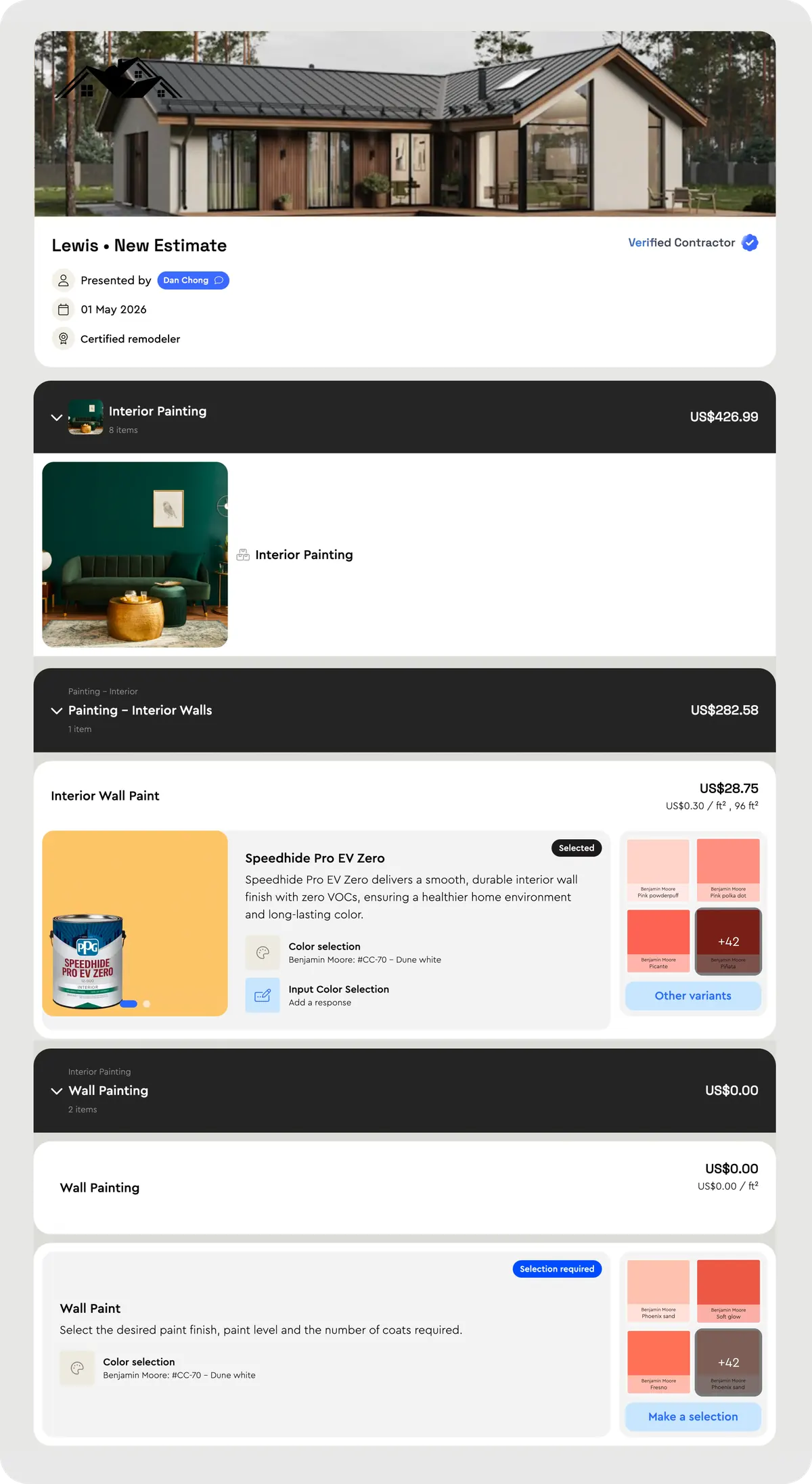
- Name the products: brand and product line build confidence and stop arguments about quality later.
- Explain your prep: clients cannot see prep in the finished job, but it is what makes paint last. Say what you will do.
- Offer options: a premium paint upgrade, an accent wall or extra rooms let the client add value without negotiating your price down.
- Make booking simple: a digital signature and deposit request in the proposal turns a site visit into a booked job.
Painting takeoffs without a site visit
Not every bid needs a tape measure on day one. For new construction and larger repaints, you can take off wall, ceiling and trim areas from the drawings. For exteriors, satellite imagery and photos give you a fast first measurement of elevations, which you can confirm on the walk-through. The key is linking each measurement to the right item, so a wall area drives both the paint quantity and the labour hours at once, and a change in one dimension updates the whole quote. That is the difference between a painting takeoff tool and a calculator: the numbers flow straight into a priced estimate instead of being copied across by hand.
What to look for in painting contractor software
- Measurement tools: draw or measure areas from plans, photos or satellite imagery and link them to your items.
- Production-rate based items: labour that calculates from area and your rates, not a flat guess.
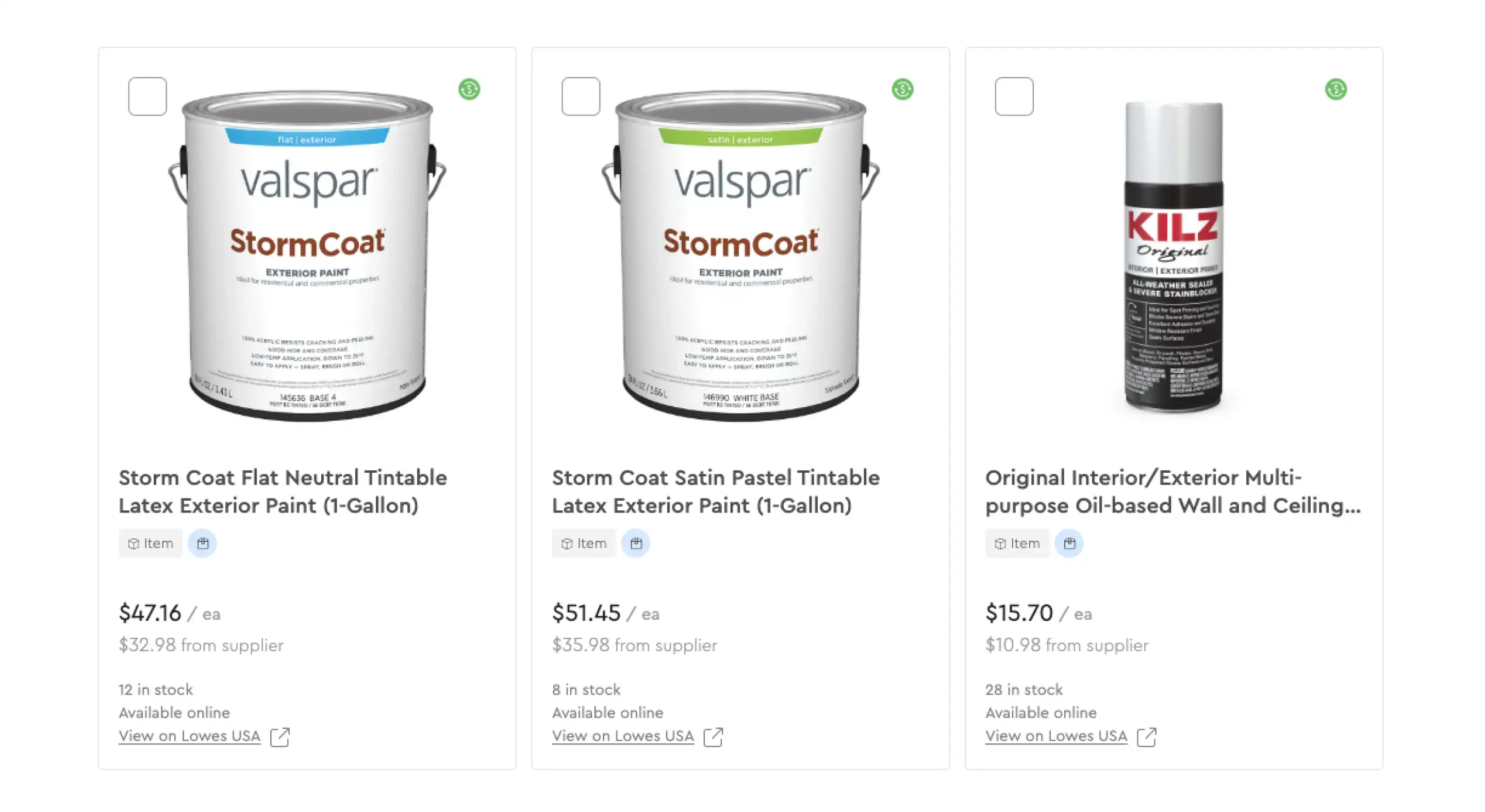
- Live material pricing: paint and supply costs that reflect your area.
- Templates: reusable assemblies for interior rooms, exteriors, cabinets and trim.
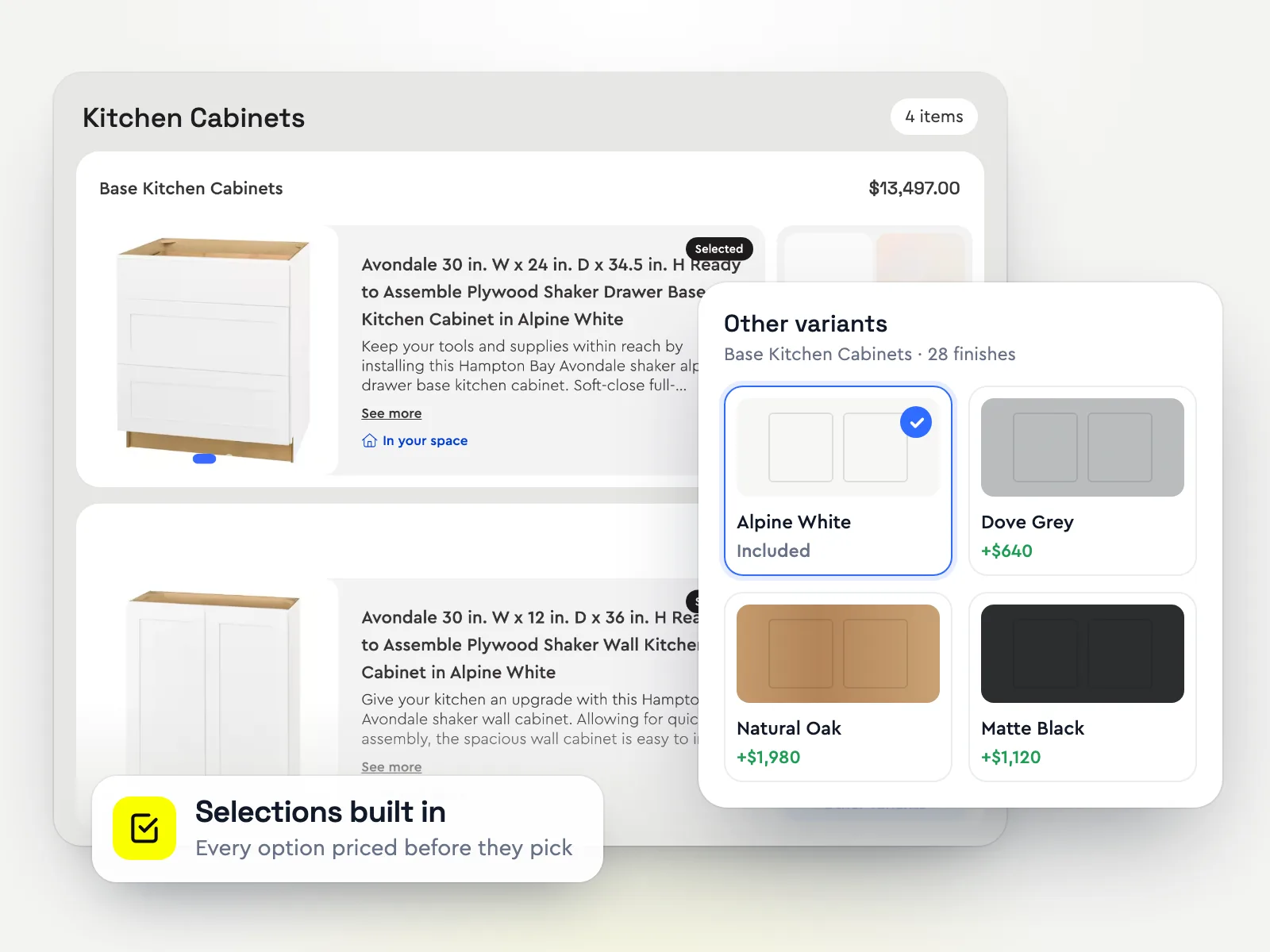
- Options: let clients choose paint grade or add rooms and see the price update.
- Scheduling and payments: a booked job becomes a schedule, and deposits and progress payments are collected online.
How Bolster works as painting estimating software
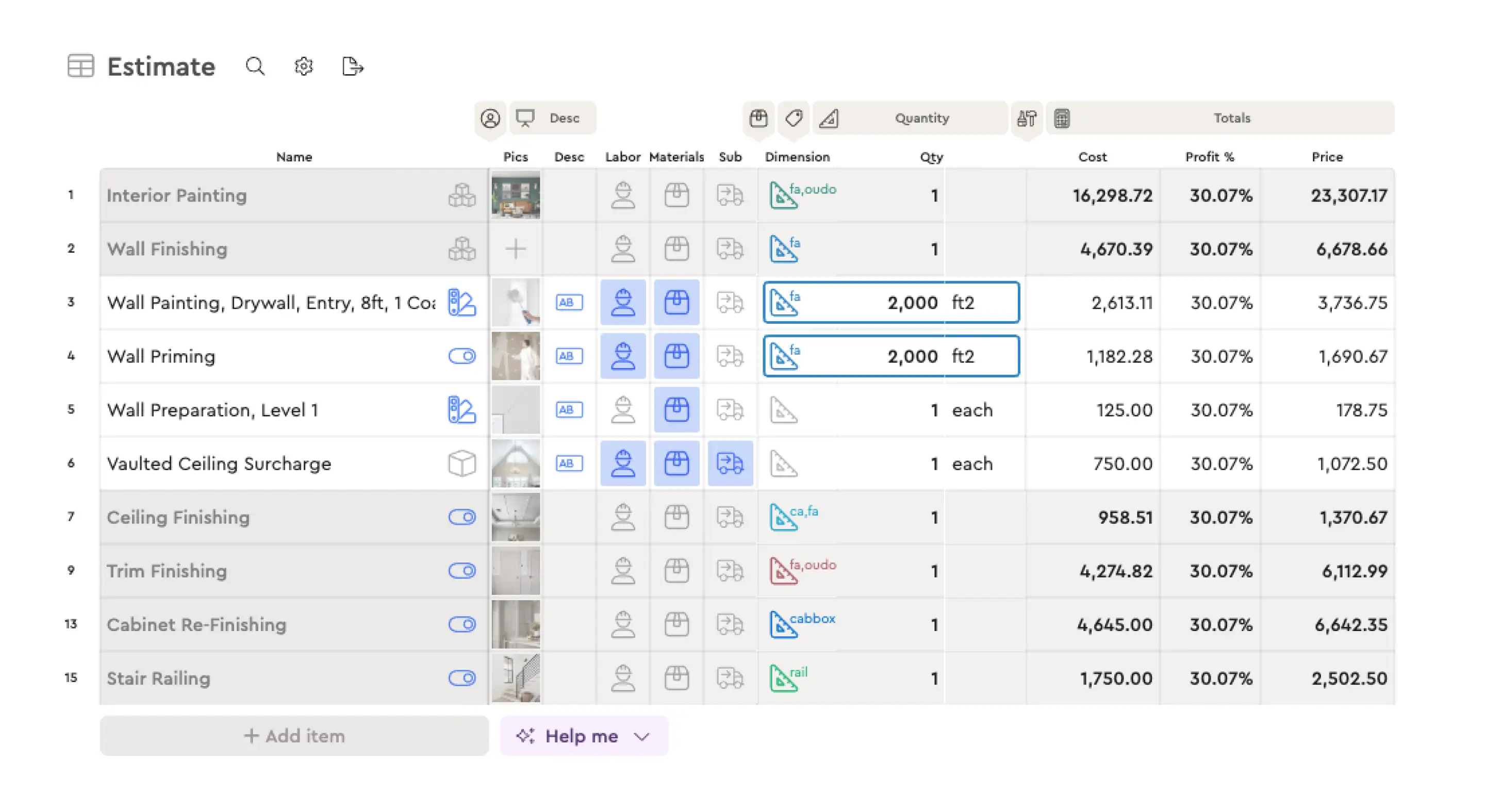
- Formula-based items: Bolster's estimating attaches formulas to items, so enter room dimensions and paint quantities, labour hours and totals calculate automatically.
- Takeoff: measure walls, siding and exterior areas from plans, photos or satellite imagery with takeoff.
- Assemblies: build interior, exterior, trim and cabinet assemblies once with your own production rates and margins, and reuse them on every job.
- Live pricing: AutoCost keeps material and labour prices current for your region.
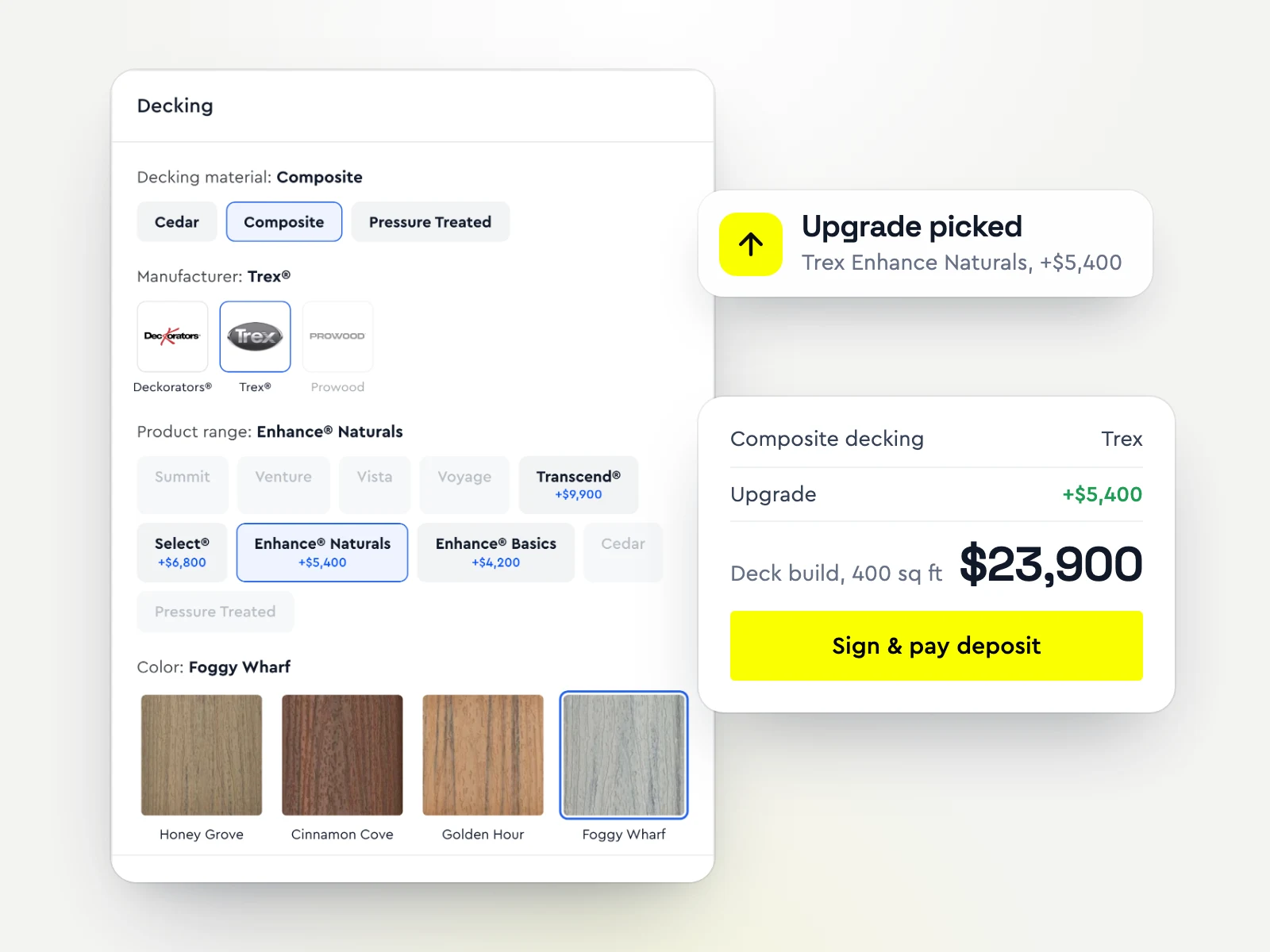
- Professional proposals: each estimate becomes an interactive presentation the client can sign online. Offer upgrades such as premium paint or extra rooms, and the total updates as they choose.
- Schedule and get paid: booked jobs generate a schedule, and payments are requested online as work is completed.
Painting contractors who also do exteriors can pair this with our roofing and siding templates. Ready to see it on a real job? Book a demo and bring the measurements from your last bid.
Frequently asked questions
What is the best estimating software for painting contractors?
The best painting estimating software calculates paint and labour from your measurements and production rates, keeps material prices current, and produces a professional proposal the client can sign online. It should also handle scheduling and payments so you are not re-entering the job elsewhere.
How do you calculate a painting estimate?
Measure the paintable area of each surface, work out paint quantity from coverage and number of coats, convert area to labour hours using your production rates, add prep and sundries, then apply your markup for overhead and profit.
Should I price painting jobs per square foot or per hour?
Build the price from hours and materials so you know your real cost, then present it per square foot or per room if that is what your market expects. Pricing only by square foot hides prep and access costs.
How much paint do I need per square foot?
Check the product data sheet. Many wall paints cover roughly 350 to 400 sq ft per gallon per coat on smooth surfaces. Rough or porous surfaces need more.
Can I do painting takeoffs from photos or plans?
Yes. Bolster's takeoff lets you measure from plans, photos or satellite imagery and link those measurements straight to your estimate items.
Does Bolster work for exterior painting?
Yes. Exterior painters use takeoff for wall and trim areas, assemblies for prep, primer and coats, and options for paint grade or additional surfaces.