Roofing software that estimates, sells and runs the job
Roofing software should take you from a measured roof to a signed contract and a paid invoice without retyping anything. Bolster is roofing estimating software and siding contractor software in one: measure the roof or walls, choose the system (asphalt shingle, metal, siding, soffit and fascia), and Bolster prices materials and labour, builds the quote, schedules the crew and collects payment.
Roofing and exterior work is competitive and time sensitive. Homeowners often collect several quotes after a storm or when a roof fails, and the contractor with the clearest, fastest, most professional quote has the advantage.
What roofing estimating software needs to cover
- Measurements. Roof area by plane, pitch, ridges, hips, valleys, eaves and rakes; wall area and openings for siding. Bolster supports satellite imagery and plan takeoffs, and the HOVER integration brings in exterior measurements from smartphone photos.
- Pitch and waste. Converting plan area to actual roof area by pitch, then adding waste for hips, valleys and cut-up roofs.
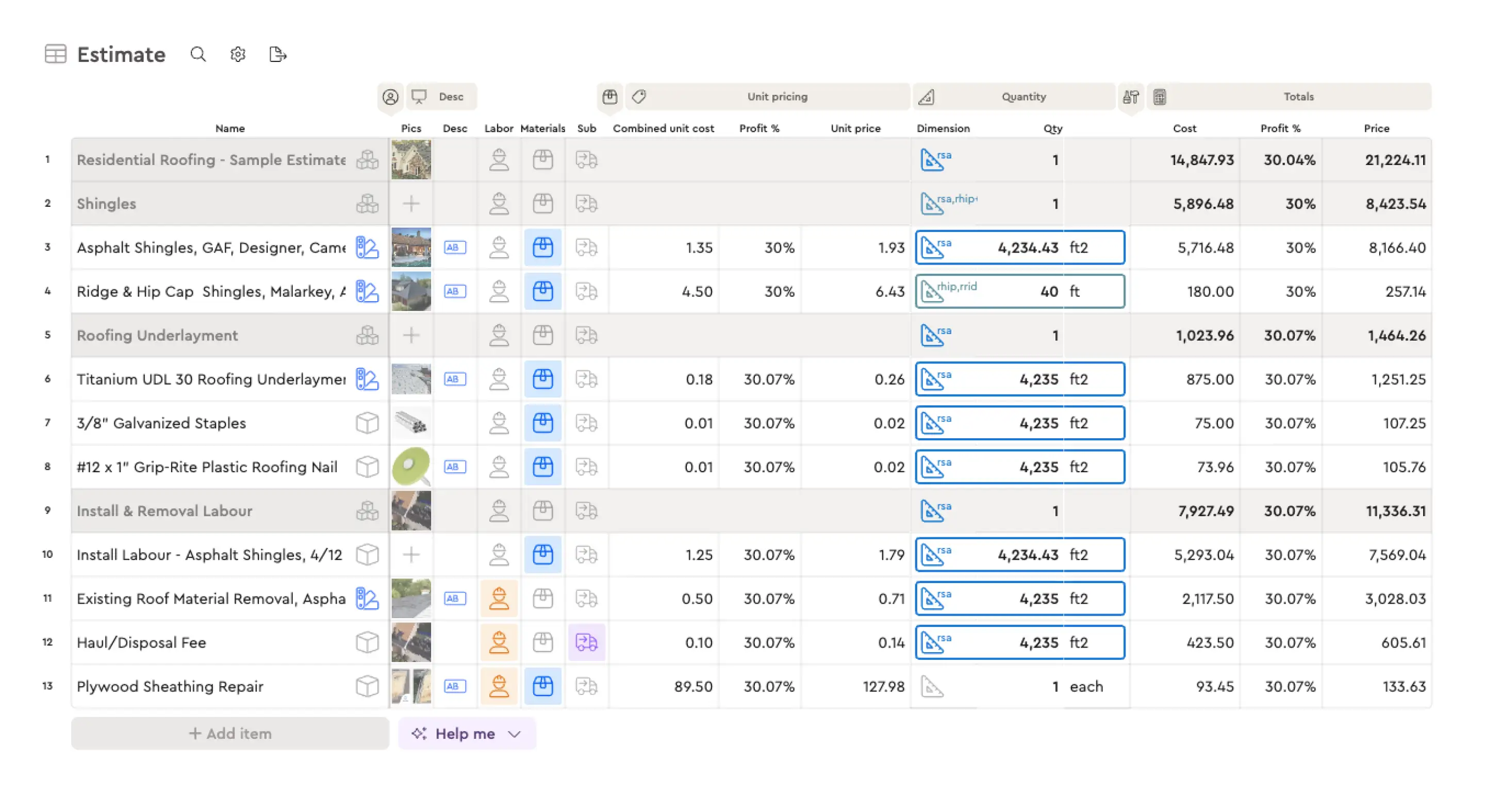
- Full system pricing. Not just shingles or panels: underlayment, ice and water shield, starter, ridge cap, drip edge, flashing, vents, fasteners, tear-off, disposal and labour.
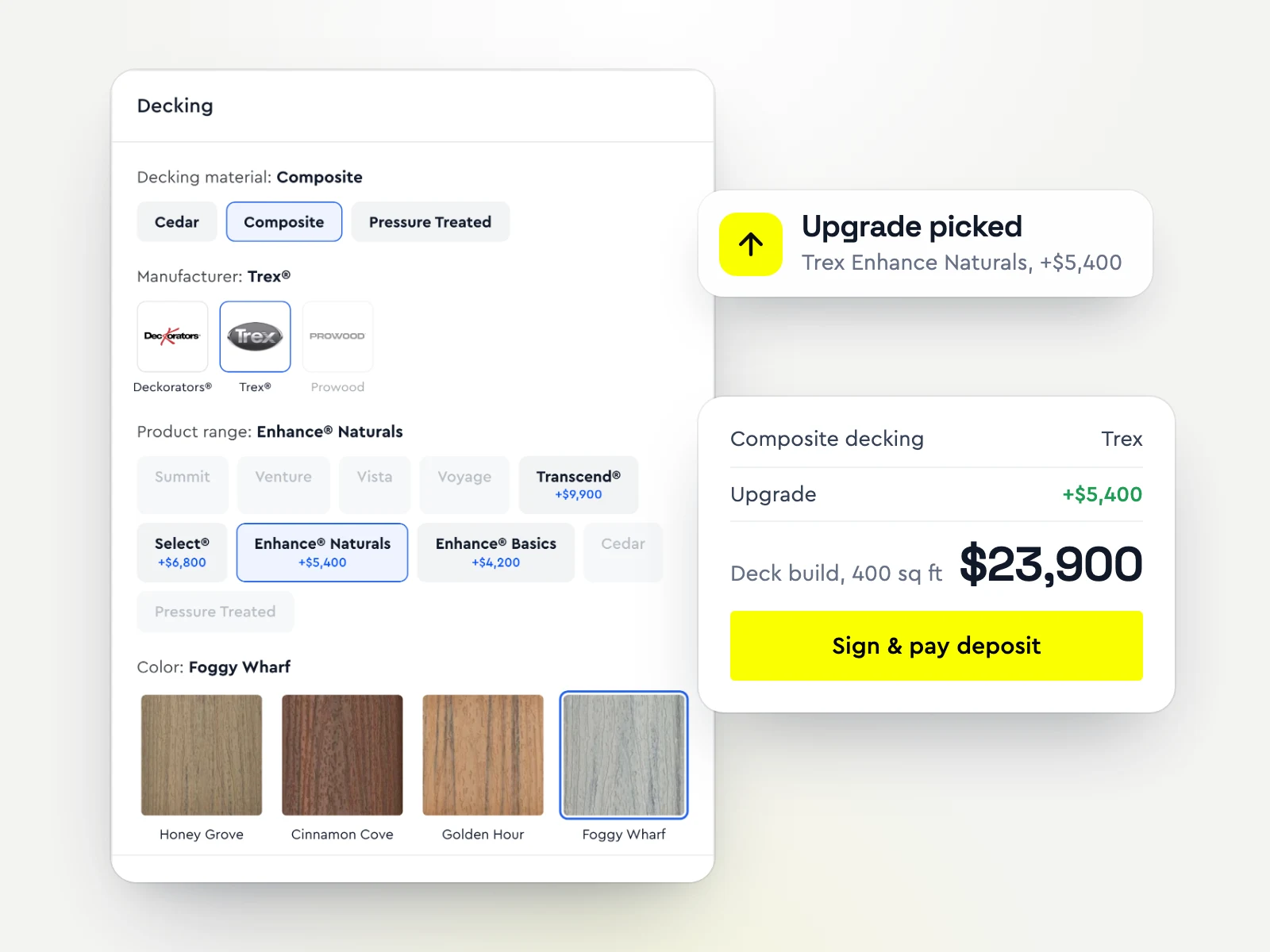
- Good, better, best options. Standard shingle, upgraded architectural shingle and metal on one quote.
- Change orders. Rotten decking and hidden damage are common. Documented change orders the homeowner signs protect your margin.
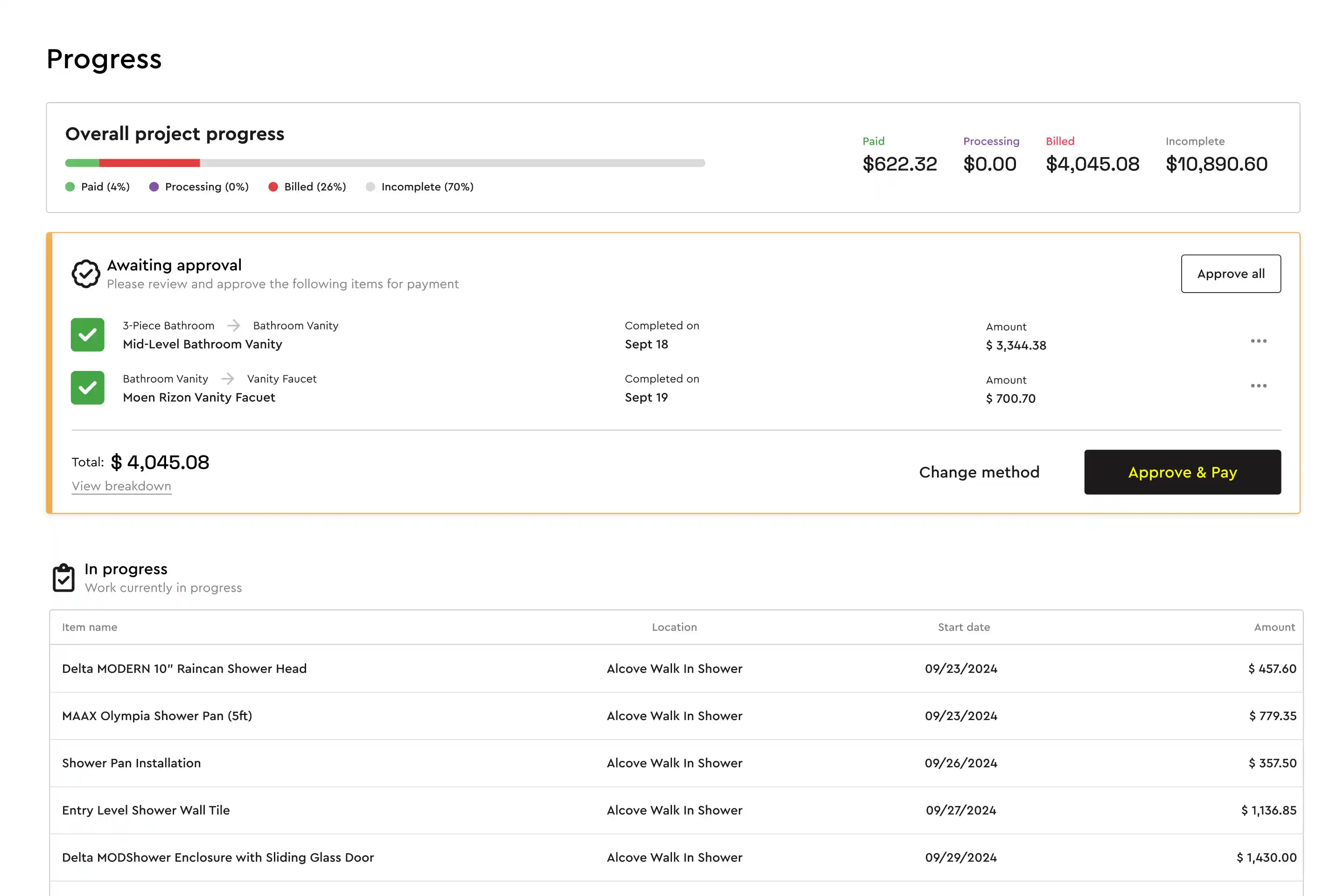
- Payments. Deposits, completion payments and insurance-driven jobs tracked in one place.
How to estimate a roof
- 1. Measure each roof plane and its pitch. Convert footprint area to true roof area using the pitch factor, then convert to squares (100 sq ft each).
- 2. Measure the linear items: ridges, hips, valleys, eaves, rakes and wall flashings. These drive ridge cap, starter, drip edge, ice and water shield and flashing quantities.
- 3. Add waste. Simple gable roofs need less waste than roofs with many hips, valleys and dormers.
- 4. Price the system, including tear-off layers, disposal, decking replacement allowance, ventilation and accessories.
- 5. Price labour per square with adders for steep pitch, multiple stories, layers and access.
- 6. Apply overhead and markup, then present options and a clear change order policy for hidden damage.
Illustrative example: a roof with a 2,000 sq ft footprint at a 6/12 pitch. Multiplying by the 6/12 pitch factor (about 1.118) gives roughly 2,236 sq ft, or 22.4 squares, before waste. Add 10 to 15% waste depending on complexity, then price underlayment, starter, ridge cap and drip edge from the measured linear footage. These numbers are only an example; use your own measurements, waste factors and supplier pricing.
Metal roofing and siding materials in your estimates
Metal roofing is priced differently from shingles. A metal roofing profile is the shape of the sheet seen from its short edge: corrugated, ribbed (exposed fastener) panels, or standing seam with flat pans between tall raised seams. Each profile has its own cover width, minimum pitch, fastening method, trims and hardware, so each needs its own assembly. If you are adding metal for the first time, set up two or three profiles carefully before expanding. Our guide to metal roofing profiles explains the differences.
Siding works the same way. Vinyl, fibre cement, engineered wood and metal siding each carry different exposure, waste, trim and labour rates. Price wall area net of openings, then add corners, J-channel, starter strip, house wrap, soffit and fascia as separate lines so the quote is easy to explain and adjust.
How Bolster works for roofers and siding contractors
Bolster Takeoff measures areas and lengths on satellite imagery, plans or photos and links them directly into your estimate. AutoCost keeps material and labour pricing current for your region. Build each roof and siding system as an assembly once and reuse it, so every estimator produces the same price for the same scope.
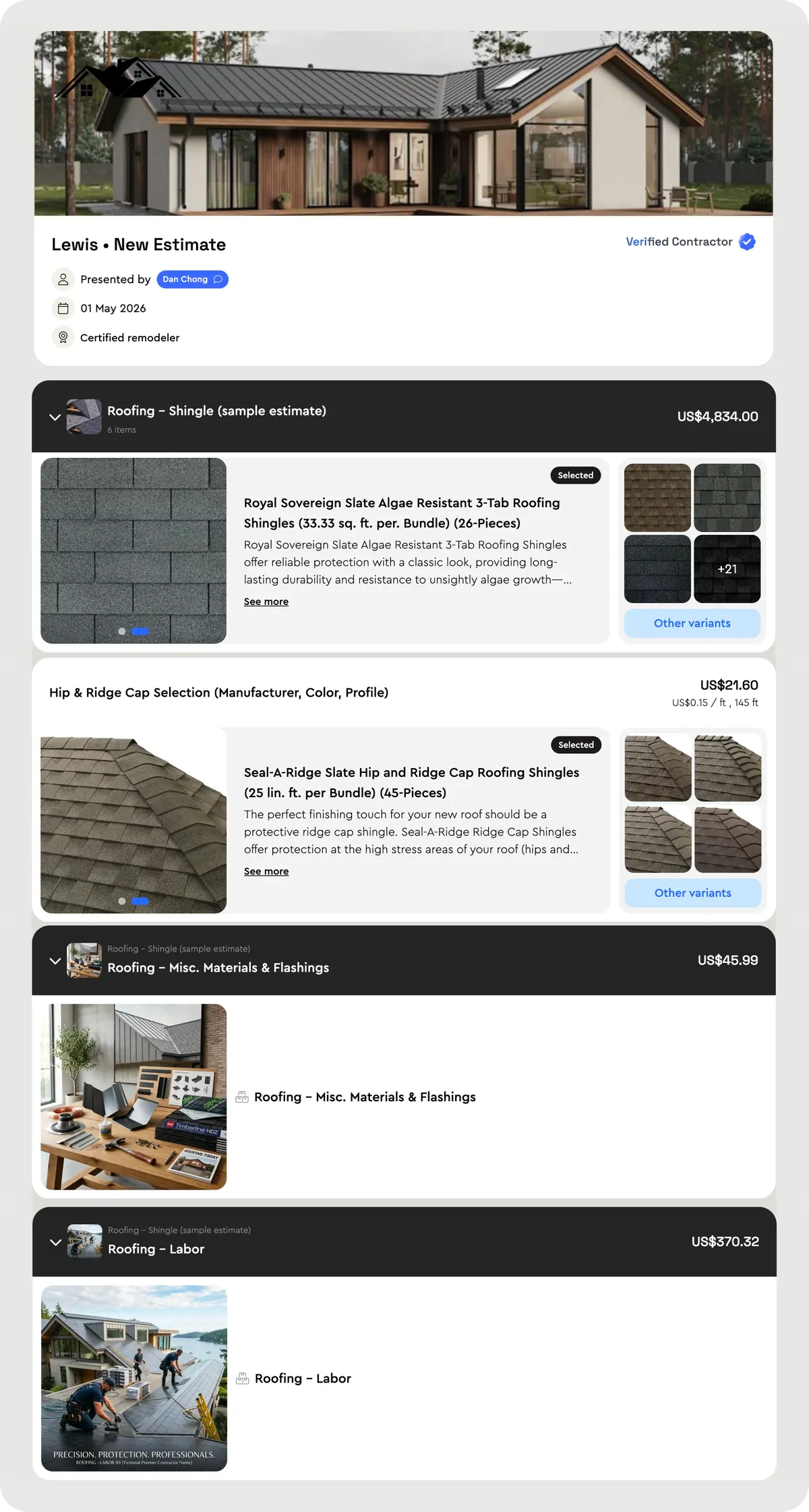
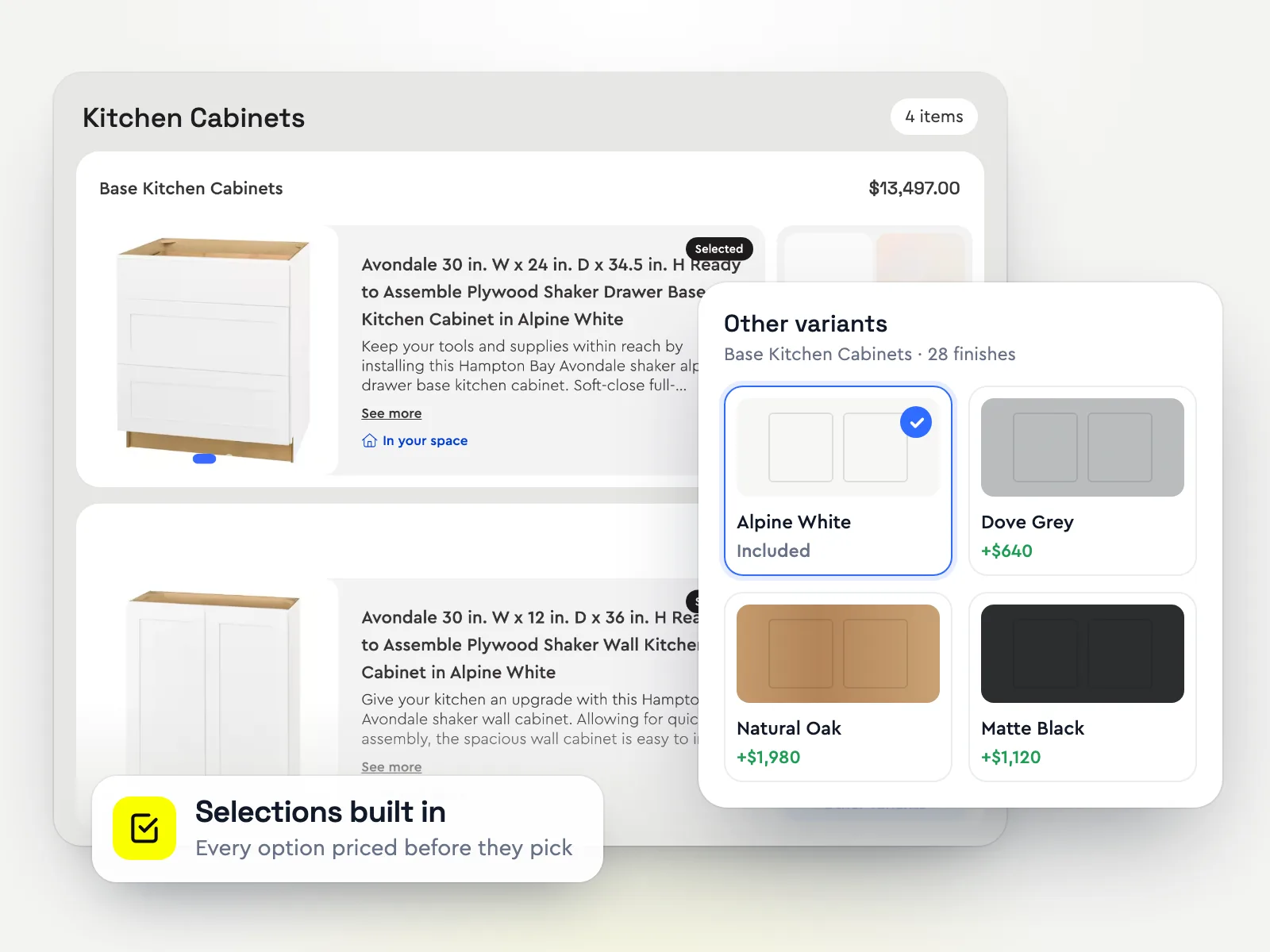
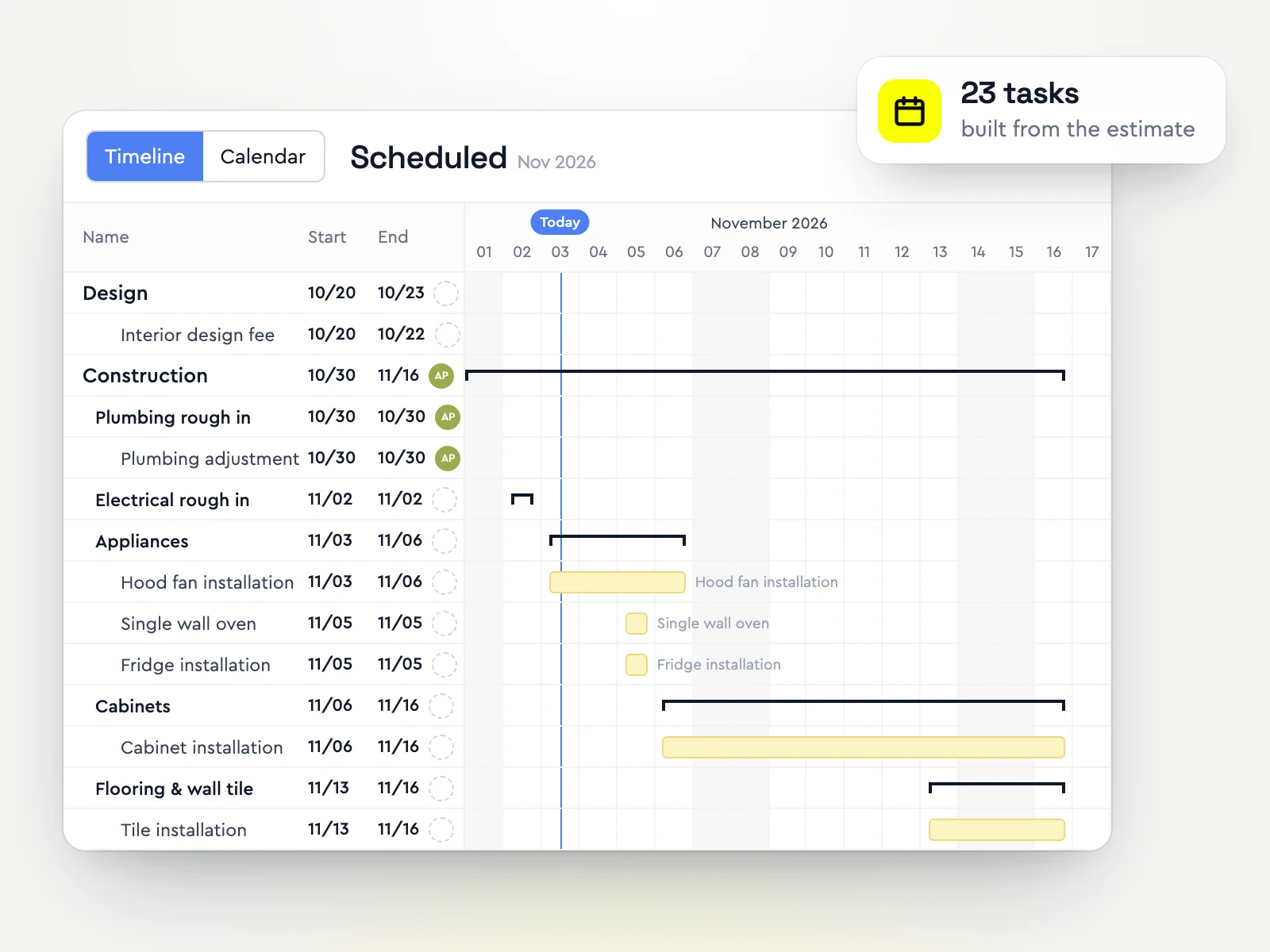
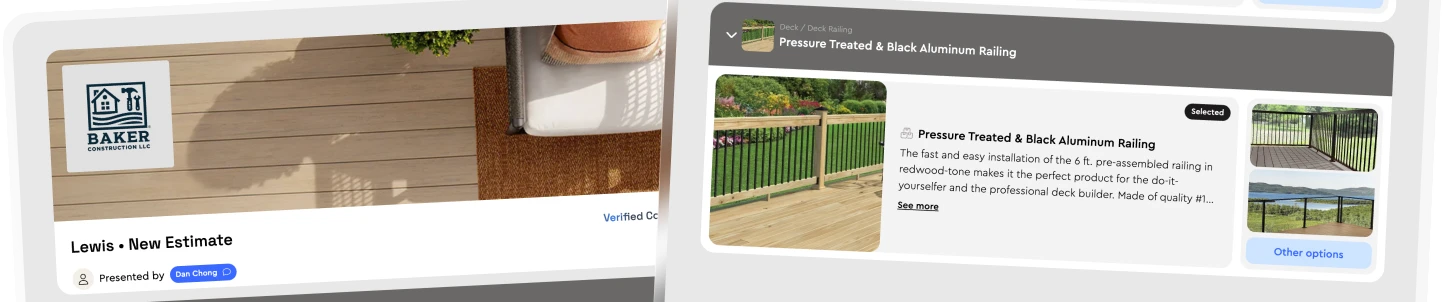
Each estimate becomes an interactive quote where the homeowner can compare shingle lines, upgrade to metal or add gutters, then sign online. If hidden damage turns up, send a change order for digital approval before the extra work starts. When the job is booked, Bolster creates the schedule, material list and budget, and you collect deposits and final payments through Bolster Payments. For broader exterior work, see our page for exterior contractors.
Common roofing estimating mistakes
- Using footprint area instead of roof area. Always adjust for pitch before converting to squares.
- Underestimating waste on cut-up roofs with many hips, valleys and dormers.
- Missing accessories. Starter, ridge cap, ice and water shield, drip edge, pipe boots, vents and step flashing add up quickly.
- No plan for hidden damage. Without a decking allowance or unit price, every rotten sheet becomes an argument.
- Ignoring layers and access. Extra tear-off layers, steep pitches, multiple stories and limited dumpster access all need labour adders.
- Pricing from memory. Shingle, metal and siding prices change. Quotes built on old numbers cost margin on every job.
Documenting storm and insurance-related work
Many roofing and siding jobs follow storm damage. Clear, itemized estimates make it easier for homeowners to understand what is covered and what is an upgrade. Keep photos with the job through the CompanyCam integration, record scope changes as signed change orders, and keep the homeowner updated through their client portal so there is a clear record of what was agreed and done.
Gutters, soffit, fascia and other exterior add-ons
Roof and siding replacements are the natural time to sell gutters, gutter guards, soffit and fascia, attic ventilation and window trim. Set each up as an optional item in your Bolster quote so homeowners can add it and see the new total instantly. Bolster contractors win 15% bigger jobs on average when they offer upgrades and options.
Roofing software versus roof measurement reports
Measurement reports and aerial tools give you roof areas, pitches and linear footage. They are an input, not an estimate. Roofing estimating software takes those measurements and turns them into a priced scope of shingles or panels, underlayment, accessories, tear-off, disposal and labour, then into a quote, schedule, material order and invoice. In Bolster you can measure directly with Takeoff or bring in exterior measurements through HOVER, and the numbers flow into your roofing and siding assemblies without retyping.
Illustrative siding estimate
For a two-storey house with 2,400 sq ft of gross wall area and 300 sq ft of windows and doors, price about 2,100 sq ft of net siding plus waste, then add house wrap for the gross area, starter strip along the base, outside and inside corners by linear foot, J-channel or trim around every opening, and soffit and fascia by linear foot of eave. Labour is priced per square with adders for height and tear-off. These figures are an example only; use your own measurements and rates.
Roofing CRM and follow-up
Roofing leads go cold quickly. Bolster's CRM pipeline moves every lead from estimate to booked job to payment, and alerts you when a homeowner opens or changes a quote so you can follow up while they are deciding.
Frequently asked questions
What is the best roofing software for contractors?
The best roofing software measures roofs accurately, prices the full roofing system with current costs, produces professional quotes with options, handles change orders and collects payments. Bolster covers estimating, quoting, scheduling, CRM and payments in one platform for roofing and siding contractors.
How do you calculate roofing squares?
Measure the roof area of each plane, adjust footprint area for pitch using a pitch factor, add the planes together and divide by 100. Then add a waste percentage based on how complex the roof is.
Can Bolster measure a roof from satellite imagery?
Yes. Bolster Takeoff lets you measure areas and lengths on satellite imagery, plans and photos. Bolster also integrates with HOVER to bring exterior measurements from smartphone photos into your estimates.
Does Bolster work for siding contractors?
Yes. Siding contractors build assemblies for vinyl, fibre cement, engineered wood or metal siding, including trims, wrap, soffit and fascia, and price them from measured wall areas.
How should I estimate metal roofing?
Set up a separate assembly for each metal roofing profile, because cover width, minimum pitch, trims and fasteners differ by profile. Start with two or three profiles you install often.
How do I handle rotten decking found during a tear-off?
Include a clear allowance or unit price for decking replacement in the quote, then document any extra with a change order the homeowner approves digitally before the work continues.