
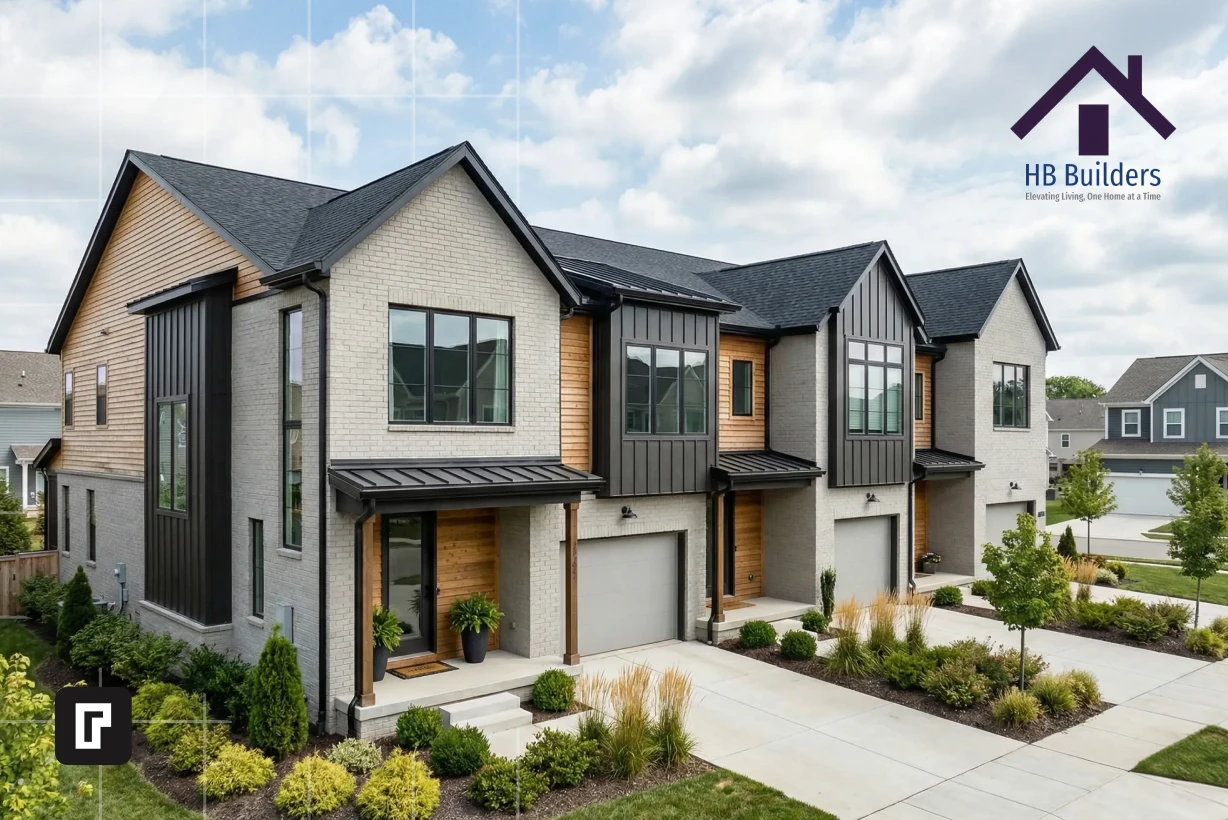

HB Builders is a licensed and insured General Contractor serving South Louisiana. Owned and operated by Baylen, they didn't start traditionally, but with smaller opportunities that eventually grew into larger remodels with the help of Bolster.
Remodeling - General Contracting - Handyman
1-10
Saving time, winning more jobs, increasing job size

Baylen Morse didn’t start in the construction industry with a grand plan to run multi-unit construction projects. He left the oil fields, picked up small handyman jobs, and focused on getting steady work for his construction business.
Within a few years, those common jobs turned into bigger remodel opportunities, and then into HB Builders—a licensed GC business bidding on larger remodels and multi-unit work.
“It’s something about whenever you say you’re licensed, the bigger jobs start to follow.”
As the project sizes grew, the estimating process became time consuming. His spreadsheets produced estimates, but the process of creating estimates, revising cost, and packaging polished estimates was slow and fragile.
“With the bigger jobs come the bigger estimates.”
By moving to a cloud based estimating solution, Baylen cut complex remodel estimates from 8–9 days down to about 30 minutes, won a four-townhome bid package worth roughly $325K, and built a repeatable system for additional projects.
“The old way, four to five hours, this way, 30 minutes.”
Baylen now produces estimates, revises estimates, and shares estimates fast enough to keep up with customers. Those estimates stay clear, and the estimates stay consistent across each project.
Baylen’s first year looked like many small builders: small repairs, punch lists, and “can you squeeze me in?” calls from customers.
“I started out, I guess, doing, I don’t wanna say handyman work, but just small odd and end jobs.”
His wife encouraged him to take the GC exam, turning a small business into a serious construction business with bigger construction projects on the horizon.
The moment he became one of the general contractors in his market, every project came with more documentation, more scope, more cost questions, and more accountability for accurate cost estimates.
The construction process didn’t slow down, but his estimating process did. Each new project demanded more estimates, more revisions, and more decision making.
“Can I whip all these estimates out? Yeah, I can. It’ll just take me eight, nine full days the way I was doing it.”
Before adopting estimating software, Baylen used Excel, PDFs, and manual formatting to create estimates that looked “good enough.”
“It was a combination of Excel. Ultimately, I would output a PDF that was as professional as I could make it.”
Every estimate started as a custom sheet. Every change meant re-checking formulas, reformatting, and rebuilding the bid package.
The takeoff work took hours, but the cleanup was worse: copying line items, validating cost totals, and rewriting notes so customers could understand the estimates.
For larger remodeling projects, the end-to-end estimating process routinely took 8–9 full days.
When your business depends on winning work, slow estimates don’t just hurt speed, they reduce accuracy, delay the bid process, and limit the number of construction projects you can pursue.
Baylen didn’t jump on the first software he saw. He tested multiple estimating tools while still running active construction projects.
“When I say I will try every single app out there before I make a decision, that’s exactly what I did.”
At one point, he had four estimating software subscriptions, hoping a single platform would finally fit his workflow.
“I think at that point I was involved with four different estimating softwares.”
He needed construction estimating software that could handle detail, options, cost changes, and repeated scopes without breaking the project math.
Even as a newer GC, he wanted preconstruction estimating software that supported planning, accurate estimates, and the kind of transparency that builds trust with customers.
The Bolster (then CostCertified) demo began with a challenge: “Give us a $30K remodel, and we’ll build the estimates live.”
They created estimates with him in about an hour, something that used to consume a full day or more.
The demonstration was a pivotal moment for Baylen, showcasing the efficiency and accuracy of the new estimating software. It highlighted how technology could transform his business operations, allowing him to focus more on project management and less on administrative tasks.
“They whipped that estimate out in about an hour. And I couldn’t believe it.”
It was a structured estimating solution with assemblies, formulas, and a customizable database.
The software's structured approach allowed Baylen to streamline his estimating process, ensuring that each project estimate was both accurate and efficient. This not only saved time but also enhanced the reliability of his proposals.
Baylen realized he could stop wrestling spreadsheets and start producing more accurate estimates with consistent structure.
He embraced the new system, realizing it allowed him to focus more on strategic growth and less on the tedious details of manual estimating.
Switching tools wasn’t magic by itself. Baylen rebuilt the way he priced work.
He developed a streamlined process that allowed him to quickly generate accurate estimates, reducing the time spent on each project and increasing his capacity to take on more work.
Baylen with the assistance of Bolster created a database of labor units, material costs, and scope logic so each new project started from proven patterns.
Instead of re-inventing every estimate, he used data driven estimating to repeat what worked and reduce errors. Each project began with a set of predefined assemblies, ensuring consistency and efficiency in the estimating process.
That structure helped him generate accurate estimates for repeated work, without sacrificing the details customers expect.
This structured approach not only improved the accuracy of estimates but also allowed Baylen to handle more projects simultaneously, enhancing his business's efficiency and profitability.
Because the software is cloud based, he could access estimates on any device with an internet connection, whether he was at the office or the job site.
This flexibility allowed Baylen to manage his projects more effectively, ensuring that he could make real-time adjustments and keep his clients informed at every stage.
Baylen noticed the biggest change was confidence.
The transformation was evident in the way clients responded to his proposals. With detailed breakdowns and clear options, customers felt more informed and confident in their decisions, leading to stronger trust and more successful project outcomes.
“I’ve had numerous compliments like, man, you have a really robust, detailed estimate.”
His new estimates looked like professional proposals, not spreadsheets, and the estimates were easier for customers to review.
The clarity and professionalism of his proposals have significantly improved, making it easier for clients to understand the scope and costs involved. This transparency has fostered trust and led to more successful project outcomes.
Instead of “drywall” as a single cost, his estimates showed labor costs and material costs in clear sections.
His estimates now provide a detailed breakdown of costs, making it easier for clients to understand exactly what they are paying for and why.
He started using upgrades and alternates so customers could compare pricing and make informed decisions.
This approach allowed customers to see the value in different options, making it easier for them to choose upgrades that fit their needs and budget.
Those detailed estimates reduced “what am I paying for?” questions and improved customer trust.
These detailed estimates not only clarified costs but also built trust with clients, ensuring they understood the value of each component in their projects.
“These other guys are just giving, you know, line item painting, drywall, with flat price and these customers are kind of like, am I being taken advantage of?”
Then came the invitation: bid a four-unit townhome development.
This project was a significant milestone for Baylen, marking his transition from smaller jobs to handling larger, more complex developments. The four-townhome bid was a testament to his growing expertise and the efficiency of his new estimating process.
The four-townhome project was a pivotal moment for Baylen, showcasing his ability to handle larger, more complex developments. It demonstrated the effectiveness of his new estimating process, which allowed him to manage multiple units efficiently and accurately.
This was not a single-room remodel. It was a repeated-scope project where a small cost tweak multiplied across four units. On multi-unit construction projects, minor errors compound. Accurate and precise estimates matter, because one wrong assumption can crush profit margins.
The four-townhome project required meticulous planning and precise cost management, as any small error could significantly impact the overall budget across multiple units.
The developer wanted fast revisions during the bid process, especially around materials like shingles and finishes.
Baylen needed a solution that allowed for rapid adjustments to material costs and finishes, ensuring that his bids remained competitive and accurate. Thats where Bolster checked all the right boxes.
Baylen’s competitive edge came from speed plus clarity. He could switch from three-tab to architectural shingles, update cost instantly, and show the impact across the entire project.
With real time pricing logic, he didn’t have to rebuild formulas. The platform recalculated the totals, keeping the estimates aligned. That dynamic workflow produced even better estimates than his old spreadsheet approach because it removed manual copy/paste steps.
Speed wasn’t limited to the office. For an exterior painting project, Baylen used Google Earth measurements and digital takeoff to create estimates quickly. He captured a quantity takeoff from aerial views, entered the values, and generated estimates in minutes.
“I’ll measure the dimensions from Google Earth. I’ll take that and I’ll plug all those into the takeoff aspect of Bolster, and there I have my estimate.”
Those quicker takeoffs helped him respond to customers before competitors even scheduled a job site visit.
For interior remodels, he used a floor-plan app to capture digital plans, then pushed those numbers into takeoff and pricing.
The old method required 4–5 hours just to collect dimensions. With structured takeoff and templates, he reduced that measurement step to about 30 minutes.
Less time measuring means more time construction, more time selling, and additional projects without adding admin overhead.
Estimating is only part of the story. The handoff matters too.
Using a single platform for estimates and scope organization gave Baylen a clearer path into project management. Because items were organized consistently, he kept a holistic view of cost drivers, customer options, and tradeoffs.
His bid management improved because the same structure supported revisions, comparisons, and final approvals.
Baylen didn’t need “more buttons.” He needed the right key features, and those key features had to work in the field.
Baylen’s day now starts inside estimating software, not inside a spreadsheet. He opens a project, pulls up past estimates, and uses the same estimating process on every construction job.
He uses construction estimating software to create a project shell, then selects assemblies from his customizable database. This is where creating estimates becomes repeatable: the software helps him create line items, create options, and create consistent descriptions so customers can compare estimates.
For each construction project, he completes a digital takeoff and a quantity takeoff. The takeoff numbers feed pricing, and the takeoff stays tied to the project so updates don’t break the construction estimating workflow. The takeoff stays fast because the takeoff process is organized.
He checks cost drivers—material costs and labor costs—then updates fields so the cost totals stay accurate. When cost changes, the software updates the estimates, which protects accuracy.
He sends estimates as polished estimates, then keeps estimates open for quick revisions. If customers ask “what if,” he can create a new option, adjust cost, and reshare estimates in minutes.
This approach uses digital estimating tools and cloud based construction estimating software so he can create estimates with an internet connection, whether he’s in the truck, at the job site, or back at the office. For Baylen’s business, construction estimating is no longer a one-off effort; it’s a repeatable workflow.
“Your templates are relatively the same. You remove what you don’t need.”
Because the estimates live in the same platform, the estimates become a starting point for project management. A project can move from takeoff to approved estimates without losing context. Over time, those estimates feed data driven estimating, and the estimates help him make data-based decisions about pricing, scope, and profitable work.
With consistent estimating software, he gets more reliable estimates and accurate estimates faster. He can produce accurate estimates across multiple construction projects, which improves accuracy, supports informed decisions, and helps him chase additional projects without drowning in admin.
Winning a project is not the finish line. By reducing errors and tightening the estimating process, Baylen protected profit margins on each project. He could keep material costs and labor costs aligned with reality, improving accuracy over time.
Even before final invoicing, he built a cost tracking habit by comparing estimates to actuals and adjusting pricing assumptions. Those comparisons supported data-based decisions about what to price differently on the next project.
Changing software can be painful, especially for small builders. Baylen’s smooth transition relied on guidance and practice, not just software.
When he had questions, customer support helped him resolve issues and keep the estimating process moving. He also leaned on onboarding guidance to refine templates and improve how he presented options.
Modern construction estimating software has to work with the tools people already use. Seamless integration with common workflows reduced friction and helped him keep building while upgrading systems.
Because it’s a cloud based solution, he didn’t worry about versions or losing files. He could pull up estimates on demand, share updates, and keep customers informed.
For Baylen, “software includes” wasn’t a checklist—it was outcomes. He didn’t want ten tools. He wanted an all in one solution that supported takeoff, pricing, presentation, and revisions.
Comprehensive features mattered only if they stayed usable in the real construction process. As his projects grow, subcontractor management becomes more important, and a consistent estimate structure supports that future.
There is no universal top-tier construction estimating software for everyone. For Baylen, the best construction estimating software was the one that produced accurate estimates, enabled quicker takeoffs, and supported professional proposals. It also functioned as general contractor estimating software, capable of handling repeated scopes and meeting the demands of larger projects.
Baylen’s story is a pattern many construction professionals will recognize.
Even with the best construction estimating software at your fingertips, common estimating mistakes can still trip up even the most experienced construction professionals. In the fast-paced construction industry, a single oversight in the estimating process can lead to inaccurate estimates, lost profit margins, or project delays. Here’s how digital estimating tools and cloud-based construction estimating software help you sidestep the most frequent pitfalls.
One of the biggest mistakes is inaccurate quantity takeoff. Relying on manual measurements or outdated spreadsheets can result in missing materials or labor costs, which means your estimates aren’t as precise as they need to be. With cloud-based construction estimating software, you can use digital takeoff tools and a customizable database to ensure every material, labor unit, and scope item is captured. This leads to more accurate cost estimates and a smoother estimation process from start to finish.
Another common issue is overlooking subcontractor management and bid package requirements. If you don’t have a clear system for tracking bids, managing subcontractors, or organizing bid packages, you risk confusion and costly delays during the bid process. The best construction estimating software includes comprehensive features for subcontractor management and bid management, allowing you to create professional proposals, access estimates in real time, and keep your bid process organized and transparent.
Cost tracking is another area where mistakes can creep in. Without real-time pricing updates and robust support services, it’s easy to lose track of material costs, labor costs, or changes in scope. Modern construction estimating tools offer cost tracking features and a holistic view of your construction projects, so you can make data-driven decisions and keep your estimates aligned with actual project costs.
Baylen isn’t stopping at townhomes.
He’s already using his templates to create estimates for full home builds, removing scopes that don’t apply and adjusting pricing quickly. With a repeatable estimating process, he can pursue additional projects without burning nights on spreadsheets.
For a handyman-turned-GC, this shift was a major shift: more accurate estimates, quicker takeoffs, clearer estimates, and better control of project outcomes.
“Why is Bolster my homepage?”
Bolster became the starting point for every project, every takeoff, and every set of estimates.
Hear from other contractors who have experienced success using Bolster.




"If you're willing to invest in your business and work with Bolster, you're going to exceed your expectations of what you can achieve. If you put in the work, you'll see a return on investment quickly."


