
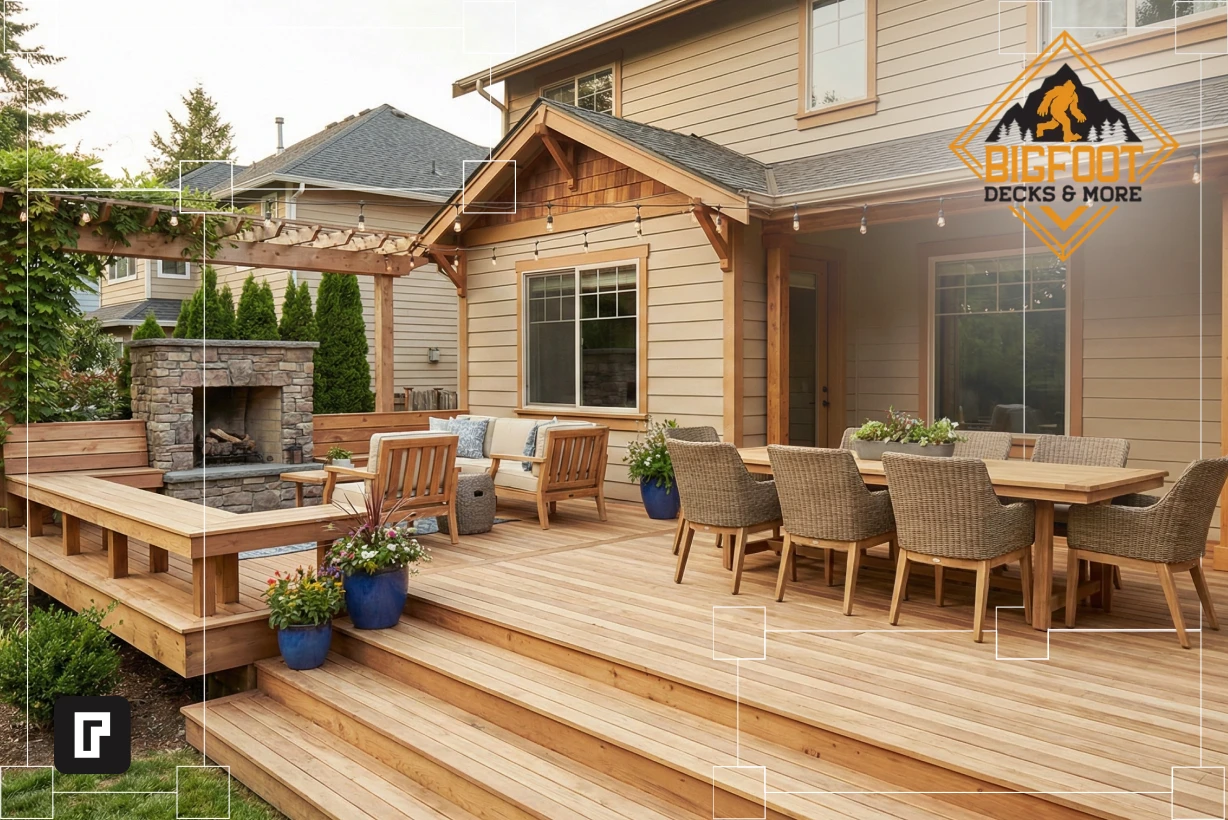

Bigfoot Decks & More started out servicing clients the Colorado Springs area for their decking needs. The scope of work quickly grew into more than just decks, with help of an estimating and proposals software, with a range of outdoor projects being available, leading to more revenue and business growth.
Outdoor - Hardscape - Decking
11-50
Cutting estimating time by half (50%), inproving job win rate by 15%

Taylor Hix built Bigfoot Decks & More LLC around high-quality deck construction and a strong customer experience, but his estimating process lagged behind the pace of his field work. After moving from desktop tools to Bolster deck estimating software, he rebuilt how he creates each estimate using reusable templates, assemblies, and option sets, so homeowners could explore materials and upgrades inside one structured quote. The result: deck estimating time dropped by about half, accuracy improved, and estimating became a repeatable sales engine instead of a nightly bottleneck. The new software also enhanced the overall estimating process, making it more efficient and reliable.
The investment in digital estimating software paid off quickly, covering its cost after just a few jobs. With a streamlined workflow, Bigfoot Decks & More is now positioned to prepare more competitive future bids, supporting continued business growth.
Taylor wasn’t trying to “modernize” for the sake of it. There are a few ways to improve the estimating process, and Taylor focused on streamlining time and effort without sacrificing quality. Improving the estimating process also supports safety by ensuring that all necessary precautions and code requirements are considered from the start. He wanted to reduce the time and effort required to produce a complete, accurate estimate for each deck project, without losing the custom feel that wins clients. In a competitive construction market, fast, clear estimates are often what keeps a project owner engaged and ready to sign.
Bigfoot Decks & More LLC is a residential contractor serving Colorado Springs and surrounding areas, specializing in custom decks, pergolas, and outdoor living spaces. Each project is designed to fit how homeowners want to use their space, whether that’s entertaining, relaxing, or upgrading home value.
For contractors working on public projects, additional insurance requirements and bonding may apply, which should be factored into project estimates to ensure compliance and accurate cost planning.
Like many small builders, Bigfoot Decks & More LLC benefits from industry-focused deck estimating software designed specifically to meet the needs of smaller construction businesses.
Taylor Hix is the owner and the person driving quoting, sales, and the build strategy. He approaches each deck like a repeatable system: consistent scope structure, consistent pricing logic, and a presentation that matches the quality of the finished work. Taylor’s approach relies on structured systems to ensure consistency and integration across quoting, sales, and project delivery.
Bigfoot is in growth mode, taking market share from more established competitors. Their edge is not just craftsmanship—it’s also speed, clarity, and professionalism in how they estimate, present, and close projects.
Most jobs start as a “dream deck” conversation, materials, layout, and features, then quickly turn into an estimate conversation where pricing, labor, and site conditions shape the final scope. Discussions about project scope and costs often include considerations like general liability insurance, which is essential for risk mitigation and compliance. The estimating process often involves different types of estimates, from early rough numbers used for feasibility to more detailed estimates required for project bidding and final budgeting. When that handoff is slow or messy, the entire construction project slows down.
Taylor’s deck work was strong, but his estimating workflow couldn’t keep up. The estimating process became the bottleneck, not because he lacked skill, but because his tools didn’t support fast, modern quoting.
Before Bolster, Taylor relied on a desktop estimating software package on an aging MacBook. It functioned, but it was tied to one machine and was increasingly rigid as his construction business scaled.
When the laptop was unavailable, the estimate was unavailable. When the machine lagged, the estimate lagged. That limitation created real friction during active bidding when prospects expected quick responses.
As leads increased, estimating started consuming nights and weekends. Revising scope or pricing meant extra manual steps, and every change increased the risk of errors in project costs.
Taylor wanted to upgrade to a new PC setup, but switching hardware meant rebuilding workflows and data. That threatened accuracy and consistency across bidding and presentation at the exact time the business needed reliability.
Simple edits took too long. Changes to materials or pricing created more work than they should have, which is a common issue when estimating software isn’t designed for flexible option-driven selling.
Taylor couldn’t easily add another person into the account or create a teachable process someone else could follow. That limited how many projects the business could pursue without adding stress and less time for higher-value work.
A slow estimate isn’t just admin time. It creates lost momentum, late follow-up, fewer accepted jobs, and a slower construction process from lead to signed agreement.
Taylor didn’t want a prettier spreadsheet. He needed construction estimating software that could keep up with real sales conversations and the way homeowners make decisions about a deck project. The right deck estimating software can enhance both the efficiency and effectiveness of the estimating and sales process.
He wanted a cloud based solution so he could access the estimate from the office, the jobsite, or anywhere a project conversation happened, without being tied to one device.
He needed a repeatable process that let him create a complete estimate quickly while protecting accuracy. In practice, that means standardized assemblies, consistent line items, and predictable pricing rules.
Clients change their mind constantly, decking boards, railings, lighting, stairs, layout tweaks, add-ons. Taylor needed an approach where changes didn’t require duplicating the estimate and redoing work.
Taylor wanted to save time, deliver accurate estimates, keep the estimate clean, and maintain confidence in pricing even as scope changed mid-conversation.
When Taylor saw Bolster, one thing stood out: he could build one estimate and let the client explore options inside it. That capability matched how deck projects are actually sold.
Taylor’s insight was simple: it’s easier to close a deck when the homeowner can see choices without forcing the contractor to rebuild the estimate every time.
Instead of duplicating versions, Taylor could keep one master estimate and preserve structure while swapping options. That reduces errors and keeps the estimate consistent and complete.
Taylor built a selections library with over 30 decking material options so homeowners could explore different tiers for their dream deck while seeing how each choice affects pricing.
This wasn’t just a new format. It changed the sales process. The client could interact with the quote, understand tradeoffs, and make decisions faster, without Taylor doing repetitive back-end rebuild work.
Bolster became the construction estimating software Taylor chose because it combined speed, flexibility, and professional presentation in a single workflow, strong enough for deck estimating software needs, but broad enough to support wider construction estimating software use as the business grows.
After signing on, Taylor upgraded his hardware and moved his estimating process into a cloud based solution. That improved access immediately, his estimates were no longer tied to one machine.
With customer success support, Taylor created a deck template aligned to how he sells and builds, so creating estimates started from a proven structure instead of a blank screen.
He organized assemblies around core deck components: framing, decking, railings, stairs, hardware, and upgrades. That repeatable structure is what makes estimating software truly useful for contractors.
Taylor built option sets and pricing logic so material changes updated the estimate automatically. This reduced manual calculate steps and made it easier to double check results.
He standardized labor assumptions, waste factors, and common scope details so the estimate didn’t drift from one project to the next.
Taylor didn’t just implement software, he implemented a repeatable estimating process that made each estimate easier to deliver, easier to revise, and easier to close.
Construction estimating software has transformed the way construction professionals approach every construction project, especially when it comes to creating a dream deck. By leveraging digital estimating tools, contractors can deliver accurate estimates and a holistic view of project costs from the very first conversation. This empowers project owners to make informed decisions about their construction project, understanding exactly how their choices impact the final design and budget. With modern estimating software, building a dream deck becomes a collaborative process—one where transparency, accuracy, and efficiency are at the forefront, ensuring that every detail is accounted for before construction even begins.
One of the standout advantages of construction estimating software is its ability to help construction professionals visualize possibilities for clients in real time. Through digital takeoff and integrated estimating tools, contractors can quickly account for labor costs, equipment costs, and materials, providing clients with accurate estimates that reflect the true scope of their project. This process not only streamlines the construction process but also brings clarity to project costs, including indirect costs that might otherwise be overlooked. By using estimating software, contractors can identify potential risks early, adjust for site-specific conditions, and ensure that every aspect of the project is considered, giving clients confidence in both the numbers and the plan.
A key feature of modern construction estimating software is its ability to offer real-time customization and personalization. Contractors can work side-by-side with clients, using digital estimating tools to adjust the project estimate on the fly, whether it’s swapping out decking materials, adding new features, or exploring different design options. This flexibility means that every dream deck can be tailored to fit the client’s vision and budget, with the software instantly updating costs and scope. By making these adjustments visible and understandable, estimating software not only streamlines the process but also builds trust, as clients see exactly how their choices affect the project in real time.
Construction estimating software does more than just crunch numbers, it empowers clients to make informed choices about their construction project. By providing accurate estimates and a holistic view of project costs, contractors help clients understand the impact of each design decision, from materials to layout to special features. This level of transparency improves accuracy, reduces risk, and ensures that the dream deck is completed on time and within budget. With the right estimating software, both contractors and clients benefit from enhanced communication, fewer surprises, and a construction process that’s as smooth and satisfying as the finished deck itself.
Once the structure was in place, Taylor changed how he presented estimates. He stopped treating the estimate like a file and started treating it as a guided experience.
Instead of emailing a static PDF, he walked the project owner through an interactive estimate that looked polished and felt custom—more aligned with the quality of the final deck.
Homeowners responded to clarity: scope, selections, and cost were visible, organized, and easy to understand. That shifted conversations from “Why is this number high?” to “Which options fit the plan and budget?”
A clearer estimate reduced back-and-forth and helped Taylor focus on serious buyers. It also helped him determine when a project wasn’t a fit before it consumed more estimating time.
In the construction industry, a well-prepared bid package is more than just a formality, it’s the foundation for a successful project. A professional bid package brings together all the essential documents, from construction specifications and drawings to contract details, giving everyone involved a clear understanding of the project requirements. For construction professionals, this clarity reduces the risk of errors and misinterpretations that can derail a project before it even begins.
Modern construction estimating software makes assembling these bid packages faster and more reliable. By centralizing project documents and streamlining the estimating process, digital estimating tools help contractors and subcontractors stay organized and focused. Estimating software allows you to build, store, and update bid packages in one place, ensuring that every detail is accurate and up to date. This not only improves accuracy but also enhances the bidding process, making it easier to present a complete, professional package that instills confidence in clients and reduces risk for everyone involved.
Submitting bids and following up with project owners can be a time-consuming process, especially when every minute counts in a competitive market. Construction management software changes the game by automating much of the bidding workflow. With digital estimating tools, contractors can generate and submit bids quickly, track their status, and communicate with clients in real time, all from a single platform.
Key features like automated quantity takeoff, labor and equipment cost calculations, and indirect cost estimation make it easier to create accurate estimates without spending hours on manual entry. Cloud-based solutions give construction professionals instant access to project data, estimates, and documents from anywhere, so they can respond to opportunities as soon as they arise. This level of efficiency not only saves time but also reduces the risk of missed deadlines or overlooked details, helping contractors win more projects and improve their overall bidding strategy.
In today’s construction industry, clients expect transparency and precision at every stage of their project. Providing detailed documentation, such as accurate estimates, comprehensive schedules, and clear breakdowns of project costs, goes a long way toward building trust and setting your business apart. Construction estimating software empowers contractors to deliver this level of detail with ease.
By using digital estimating tools, construction professionals can create a holistic view of each project, accounting for materials, labor, equipment, and all associated expenses. Construction management software keeps everything organized and accessible, making it simple to share up-to-date information with clients and address their questions promptly. This transparency not only reduces the risk of miscommunication and costly errors but also demonstrates a commitment to professionalism and accuracy. The result is stronger client relationships, smoother project execution, and a reputation for reliability that drives future business.
In the old workflow, every change created duplicate entry, manual math, and repeated formatting. New material? More edits. Different tier? Another version. Added feature? More recalculation and cleanup.
Now Taylor starts from a template, selects options, and lets the software calculate totals. The heavy lift is front-loaded into the system so each new estimate is faster.
Taylor invested time once to build assemblies and a materials library, then reused that structure for every new project. That’s what turns creating estimates into execution instead of reinvention.
Taylor reports that a typical deck estimate now takes about half the time compared to his previous process—freeing up time for selling, scheduling, and running the construction business.
Taylor opens a proven deck template rather than starting from scratch, which reduces setup time and helps keep the estimate complete.
He doesn’t copy an estimate just to show a different board color or material tier. Options keep everything in one place.
When a selection changes, the estimate updates, keeping scope and cost aligned without manual work.
Structured data stays consistent across the project pipeline. That reduces errors and makes revision cycles shorter.
A predictable structure makes it easier to double check totals and catch mistakes before presenting the estimate to a client.
Like any switch in estimating software, there was a learning curve. But Taylor didn’t have to figure it out alone.
Bolster’s customer success team helped refine assemblies and tune the process so estimates stayed fast and consistent.
As Taylor extended the same system to pergolas and roof coverings, support helped adjust logic and structure so each estimate remained accurate and easy to build.
Taylor’s results improved because estimates were tied to consistent inputs and repeatable logic. Clean structure protects accuracy, especially when estimates go through multiple revisions.
A materials library made pricing updates easier and reduced the risk of stale data affecting the estimate.
Taylor refined labor assumptions by scope type, complexity, and crew skill level so labor costs stayed realistic across different deck designs.
For larger jobs, he accounted for equipment costs and logistics. He also captured indirect costs more consistently—site setup, hauling, admin load, supervision, and time risk that can erode profit if ignored.
Site conditions, access limitations, and market conditions can change quickly in construction. Capturing these realities helps improve accuracy and reduces surprises during the construction process.
Over time, Taylor used past projects to tighten assumptions. In practical terms, that’s data driven estimating: using real outcomes to improve the next estimate.
Taylor treats the estimate as a guided sales experience, not just a number. That shift improved trust and helped homeowners commit faster.
Because Taylor can create, revise, and present an estimate quickly, leads stay warm. That speed advantage helped Bigfoot win more deck projects in competitive neighborhoods.
Taylor’s system supports real time pricing updates so estimates reflect supplier changes. Modeling labor, materials, and indirect costs makes it easier to spot margin leaks early.
A structured estimate creates a holistic view of scope, pricing drivers, and risk, helping Taylor determine whether the project is priced correctly before committing.
Taylor’s quotes look more complete and polished, helping the brand stand out against competitors using basic proposals.
Speed matters in bidding. Faster turnaround led to more accepted projects and helped Bigfoot take market share from more established general contractors and local specialists.
Because the process is consistent and teachable, Taylor can scale estimating beyond one person and bring others into the account as the business grows.
Taylor didn’t adopt new estimating software just to modernize. He rebuilt the estimating process into a repeatable system: templates, assemblies, option sets, and clean pricing logic inside a cloud based solution.
That shift cut deck estimating time roughly in half, improved accuracy, and turned each estimate into a stronger sales experience—helping Bigfoot grow without doubling time behind a desk.
Hear from other contractors who have experienced success using Bolster.





"If you're willing to invest in your business and work with Bolster, you're going to exceed your expectations of what you can achieve. If you put in the work, you'll see a return on investment quickly."


