Construction Intelligence is the system of record and reasoning that sits underneath
every number a contractor gives a client. It is not a chatbot bolted onto estimating
software. It is four connected layers — live pricing, an estimating engine, a project
management engine, and the client-facing sales tools — all running off one shared set of
construction data that only Bolster has.
Most software in this category sells you "AI." A text box guesses a number. Construction
Intelligence does the opposite: it calculates — pricing real materials and
labor at real units, in real quantities, for your trade and your region, then carries that
math all the way to the option your customer taps at the kitchen table.
Generic AI guesses. Construction Intelligence calculates.
Ask a general-purpose model what it costs to frame a basement and it will give you a confident
paragraph and a number pulled from the open internet. It does not know what lumber costs in
your city this week, what your crew charges per hour, or how your supplier sells drywall —
by the sheet, the pallet, or the lift. So the number is a guess that sounds like an answer.
Construction Intelligence starts from data, not language. Every estimate is built from live,
localized costs and your own rules, then assembled into a defensible quote. The result isn't
a plausible-sounding figure — it's a number you can stand behind in front of a client and
still hit your margin on.
The four layers
The customer only ever sees one layer. The other three do the math that makes the answer
right. From the foundation up:
Layer 1 — AutoCost + your data
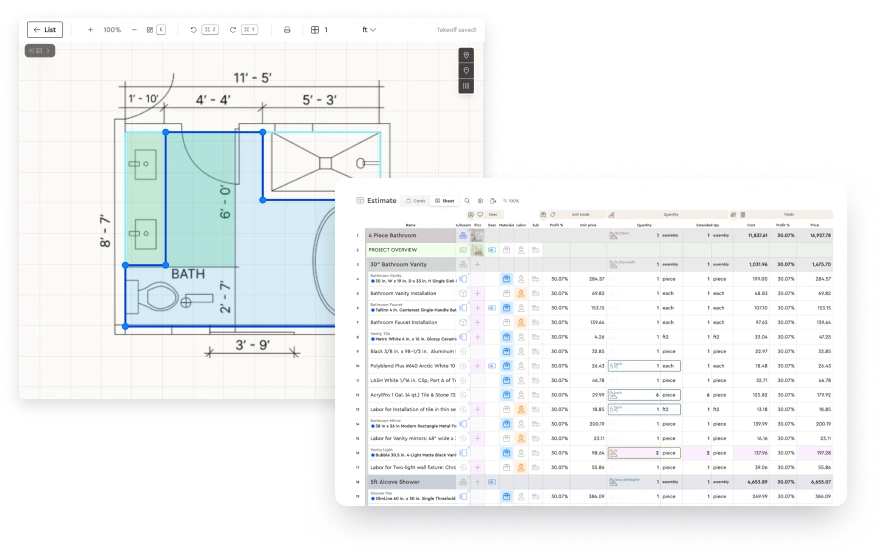
Live, localized cost data for materials and labor, drawn from 100M+ real construction
items and refreshed as the market moves. Have your own supplier pricing? Plug it in —
Bolster blends your rates with AutoCost so every estimate reflects your business, not a
national average. Explore AutoCost →
Layer 2 — The Estimating Engine + your rules
Suppliers quote in pallets and cases; plans give you dimensions; real estimates need units,
counts, and waste factors. The engine does that conversion automatically — with battle-tested
defaults by trade that you can override with your own waste percentages, hours-per-unit, and
assemblies. See the Estimating Engine →
Layer 3 — The Project Management Engine
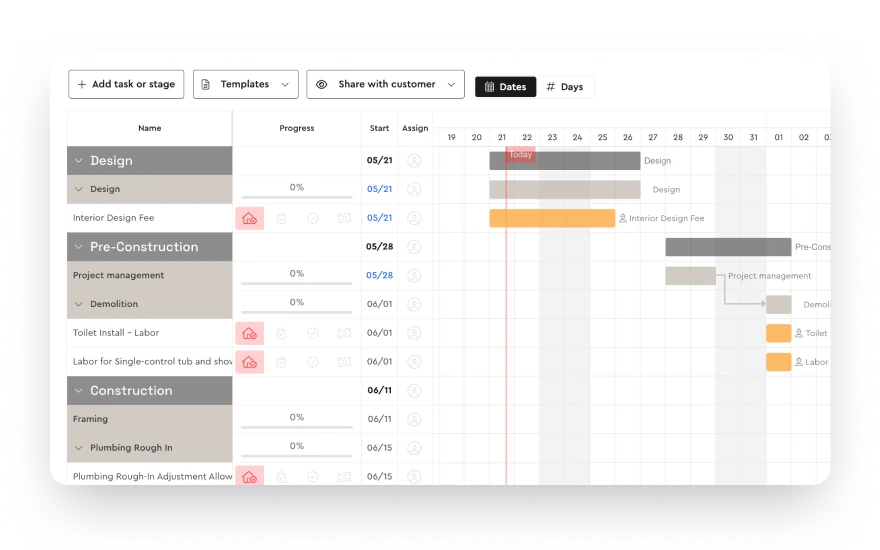
Once materials are dialed in, the system plans the job: which crews are in-house versus
subbed, what order they show up in, how long each task takes — then bundles it into a schedule
that syncs back to the estimate. Change one input and the whole job cascades.
See Scheduling →
Layer 4 — Sales Tools
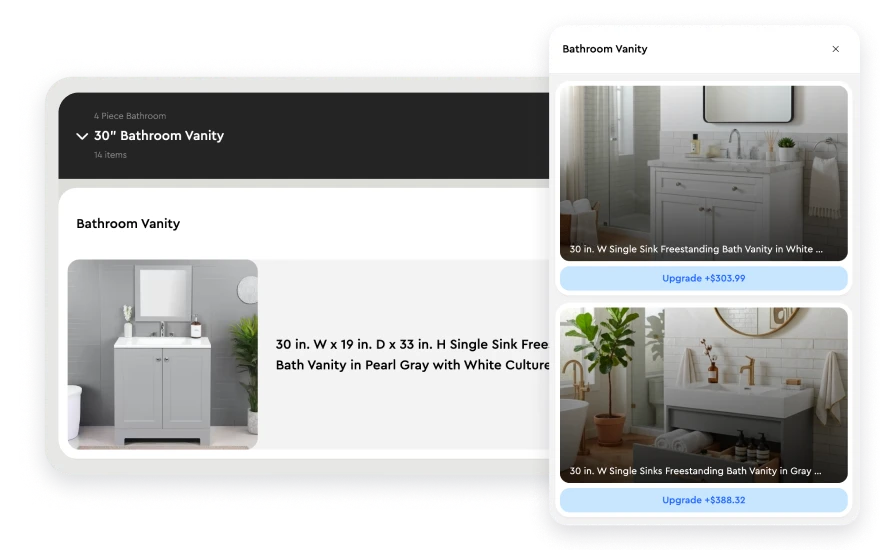
The tip of the iceberg. Every assembly carries the options, finishes, and add-ons your
customer chooses from. The three layers underneath stay invisible — the client just sees clean
choices, accurate prices, and upgrades they actually want to say yes to.
See Sales Tools →
Why it matters for your business
When pricing, estimating, scheduling, and sales all run off the same intelligence, the numbers
stop fighting each other — and the results show up where it counts:
Estimates that used to eat a weekend get built in an afternoon. Interactive proposals win more
of the jobs you quote. In-proposal upgrades grow the jobs you win. And because every layer is
tied to the same data, a price change at the supplier flows through to the estimate, the
schedule, and the client's options without you re-keying a thing.
Construction Intelligence vs. "AI features"
Plenty of tools now advertise an AI feature or two. The difference is structural. A bolted-on
feature can summarize a document or draft a line item. Construction Intelligence is the
foundation the whole platform is built on — which is why a single source of pricing truth can
drive your estimate, your project plan, and your customer's proposal at the same time. Other
tools help you build. Bolster helps you grow.
Frequently asked questions
Is Construction Intelligence the same as AI?
No. Generic AI generates language and guesses at numbers. Construction Intelligence is a
data-and-reasoning system that calculates real costs from live pricing and your own rules,
then carries that math through estimating, scheduling, and the client proposal.
What are the four layers of Construction Intelligence?
AutoCost (live, localized pricing plus your supplier data), the Estimating Engine (unit
and quantity math plus your rules), the Project Management Engine (crews, sequence, and
schedule), and the client-facing Sales Tools.
Can I use my own pricing instead of AutoCost?
Yes. You can use Bolster's live market data, your own supplier pricing, or blend both —
so every estimate reflects how your business actually buys and bills.
Who is Construction Intelligence built for?
Residential builders and contractors — general contractors, custom home builders,
remodelers, and the trades — who want accurate estimates, faster quotes, and proposals
that win and grow jobs.