
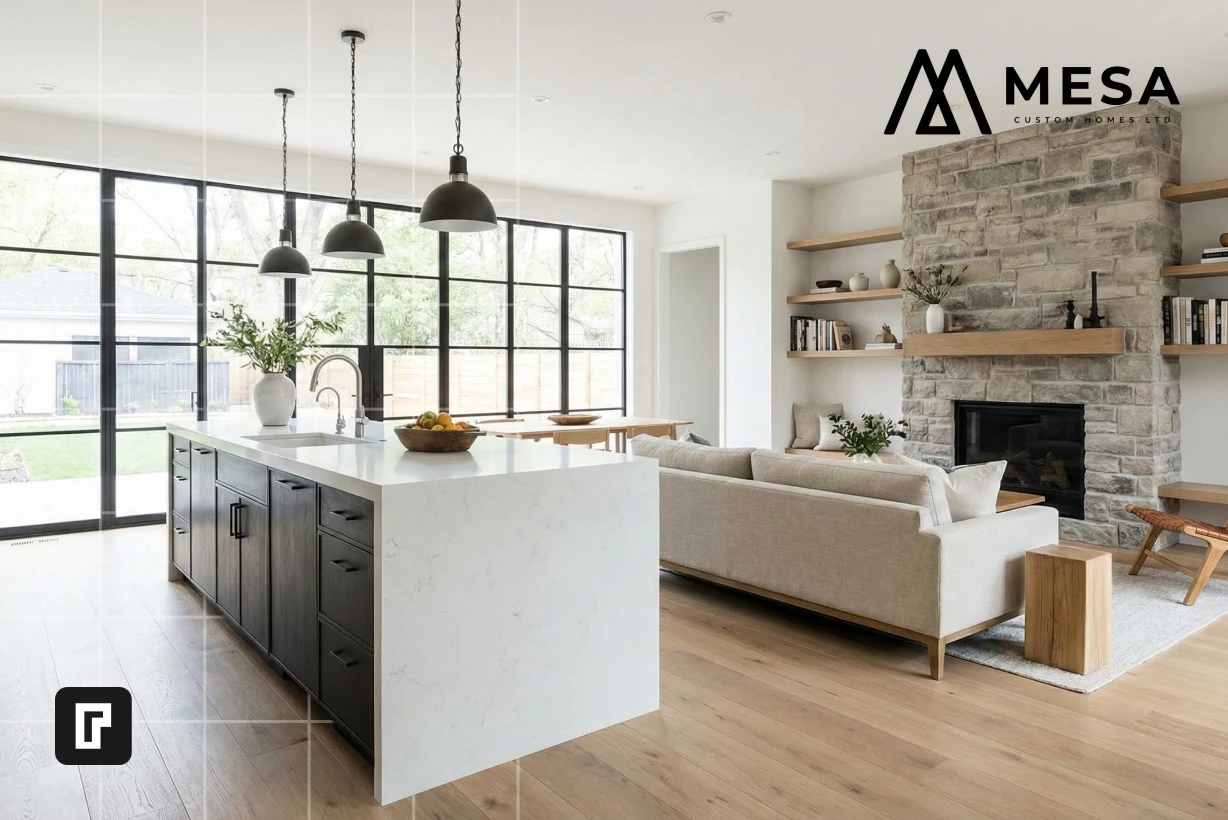

Mesa Custom Homes was born out of a third-generation builder Jason, and operates out of Vancouver, BC. Jason's reputation is rooted in trust, craftsmanship and community relationships, and those only seem to get stronger as a result of a completely custom experience with clients, where the Bolster software has excelled in assisting with.
Custom Home Building
1-10
Estimating 5x faster (80% faster), getting paid twice as fast, improving job win rate by 100%, improving client experience and trust

Mesa Custom Homes is a boutique custom home builder focused on high-quality residential construction. Like many custom homes builders, their business is not built on volume. Instead, they take on a limited number of carefully selected projects each year, prioritizing craftsmanship, attention to detail, and long-term client relationships.
“We’re building houses anywhere from 2,500 square feet to 12,000 square feet right now.”
Mesa Custom Homes values building not just houses, but lasting relationships with families, emphasizing their commitment to creating homes that support family life and legacy.
For home builders completing five to seven projects annually, each project carries real weight. These challenges are common across the construction industry, especially for low-volume custom homes builders, where one missed opportunity can materially impact average annual revenue, team utilization, and long-term planning for the construction business. There is little margin for inefficiency or lost momentum.
“For us… depending on the sizes of the homes, anywhere from five to seven homes a year, then that can keep us really busy.”
Jason Ratzlaff, owner of Mesa Custom Homes, noticed a disconnect in his sales process. The homes he built were high-end and thoughtfully designed, but the budgets used to present those homes did not reflect the same level of quality or clarity.
Budgets were created in Excel. From a technical standpoint, the numbers were accurate. From a client perspective, they were vague, text-heavy, and difficult to interpret. Line items showed costs, but not context, and Excel lacks the features needed to present budgets in a client-friendly way.
“Our old way was just an Excel sheet… Bottom line, I mean, you still kind of arrive at a similar place, it’s just not very descript for your client.”
This is a common issue across residential builders and general contractors. Even when estimates are correct, unclear budgets make it harder for clients to understand what they are paying for and why certain costs exist.
Building a full project budget for a custom home often took close to a full week. Larger homes with more square footage or complexity took even longer. By the time the first version was ready, energy around the project had already cooled.
“Generally speaking… you would spend almost a week—full week—putting a full house budget together… or maybe even more depending on the size of the job.”
Client feedback was predictable. They wanted to remove some items, upgrade others, or explore alternatives. Each request resulted in additional tasks for the team, contributing to project delays as days of rework reset the timeline and delayed the next conversation.
While budgets were being revised, clients had time to talk with other builders or reconsider the project entirely. Every delay created risk.
“And then there’s a week where they could talk into another builder or just losing the steam.”
Clients building a dream home want to feel confident. They want to understand how their money is being allocated and how decisions affect the final outcome. Without detailed budgets, trust is harder to build.
The benefits of clear, detailed budgets include improved transparency, better communication, and increased trust between clients and custom homes builders.
Excel made it difficult to show actual costs in a way that felt tangible. Large lump-sum numbers raised questions instead of answering them. Clients struggled to see how individual choices affected the total project budget.
Jason decided the budgeting process needed to change. Not the quality of building. Not the services offered. The way budgets were created, shared, and discussed with clients.
Mesa Custom Homes implemented Bolster as their construction budget software, using it as a central platform for budgeting, presentations, and early-stage planning. The platform gives both the team and clients easy access to all budgeting and planning information in one place.
Instead of grouping costs into broad categories, budgets were rebuilt line by line. Each component of the project was separated and explained.
“I had it all kind of lumped, but now I have everything separated… your stone for your master bedroom fireplace, your flex room fireplace, your living room fireplace, your exterior post, so we can really shape and mold that in our meetings.”
Fireplaces, exterior elements, finishes, and systems were shown individually. This made it easier for clients to see how each area of the property contributed to the total cost.
Photos and descriptions were attached to nearly every line item. Clients could see materials, understand construction methods, and appreciate the form and architectural style of each element, connecting numbers to real-world outcomes.
“Now I’ve got pictures for literally every line item and descriptions of what that looks like.”
Budgets stopped feeling abstract. They became a clear representation of how the home would actually be built.
Fixtures and finishes were grouped into tiers.
“I’ve categorized… with three tiers, silver, gold and platinum.”
This allowed clients to compare options without redesigning the entire budget. Instead of reacting to a final number, clients could shape the budget based on preferences and priorities.
Many clients compared the experience to online shopping. They could view options, understand pricing, and see changes reflected instantly.
“To go buy shirts, you scroll online, you see how much they cost, you click it in your cart… It’s like this is what it looks like. This is how much it costs…”
Budgets were no longer sent out and discussed days later. Instead, Jason used the platform as a convenient place for clients and the team to collaborate and make decisions together, walking through budgets live and adjusting selections in real time.
“Now we can just do that in the meeting. OK, so you want grates in your sink, click it in the cart, your number goes up…”
If a client wanted to upgrade materials or adjust scope, the budget updated immediately. Decisions happen during the meeting, not weeks later, and immediate budget updates are key to keeping projects on track and clients engaged.
When clarity and confidence increase, more projects move forward. Meetings ended with direction instead of uncertainty.
Another major improvement came from using the software earlier in the design process, allowing clients to see the exact costs associated with building their new home much sooner.
Clients often fall in love with a dream home long before understanding the full cost. By the time custom home plans are complete, it can be too late to make meaningful changes.
When budgets came in far above expectations, projects were either canceled or scaled back dramatically.
Mesa Custom Homes began the process to create early budgets using initial floor plan concepts and basic elevations.
“Now… we’re calling it like a preliminary budget… integrated budgeting… before people have sunk in 15, 20 grand into their house plans…”
Before clients invested heavily in detailed home plans, they could see a realistic financial range and adjust expectations accordingly.
This collaborative approach allowed designers, builders, and clients to work together toward a shared goal: a buildable, affordable custom home, while also helping the team and clients access the right resources—such as experienced local talent and essential tools—for each stage of the project.
Early visibility reduced financial risk and helped the team overcome common challenges in custom home building, avoiding disappointment later in the process.
Families could move forward knowing their dream was achievable within their budget, and this approach helped families balance the demands of building a home with everyday life.
Busy builders typically operate within a defined area and follow standard workflows that benefit from streamlined systems. Busy builders need systems that save time, not add complexity. Reworking budgets repeatedly is inefficient and costly.
Bolster became a central place to manage budgets, track changes, and support construction management workflows. The platform also supported scheduling, payments, and broader construction management software needs.
Jason could easily track costs, expenses, and payments throughout each project. This improved financial management and long-term decision-making for the business, as robust reporting features provided real-time insights into project costs and performance.
Each project stayed organized from early planning through new construction and completion. Clients were excited enough to share their budgets with friends, generating organic referrals.
“He said he was opening it every day, and he said he was showing all his buddies, he was all excited about it.”
Clear, structured budgets signaled professionalism and attention to detail. The process attracted clients who valued transparency and planning. Mesa Custom Homes effectively doubled their project booking rate.
For a small team, one additional win can significantly impact revenue and profits.
“If it wins you one job a year even, it’s worth it. And it did… We… just landed one of the larger homes we’ve ever landed and I think this had a lot to do with it.”
The software delivered more value than expected, helping secure multiple projects.
“We… landed one of the larger homes we’ve ever landed and I think this had a lot to do with it.”
The approach worked regardless of project size or builder type. The software provided digital tools that enhanced, rather than replaced, the team's expertise.
With fewer delays and clearer communication, the team could focus on building high-quality homes.
For custom home builders, clarity and transparency are not optional. Mesa Custom Homes proved that improving the budgeting process can transform results.
By changing how budgets were created and presented, they changed how projects were won.
Hear from other contractors who have experienced success using Bolster.




"If you're willing to invest in your business and work with Bolster, you're going to exceed your expectations of what you can achieve. If you put in the work, you'll see a return on investment quickly."


